
What Are the Top 10 Cardboard Tube Sizes?

Choosing among the top 10 cardboard tube sizes is rarely as simple as picking the widest or strongest option. Tube performance depends on diameter, length, wall thickness, paper grade, and the product inside. A mailing tube for an A3 poster needs different protection from a narrow tube holding labels, wire, or fabric. Even storage conditions matter. Humidity can soften the spiral-wound paper and reduce stacking strength.

Packaging researcher Dr. Diana Twede offers a useful perspective: “The history of packaging is the history of human civilization.” Her observation reminds us that packaging choices should reflect real handling needs, not just attractive measurements. In practice, common cardboard tube sizes may include small cores near 25 mm, medium tubes around 50–75 mm, and larger shipping tubes above 100 mm. Lengths can range from short sample tubes to long poster containers exceeding one metre. These figures are practical references, not universal rules.

Small differences matter. A loose fit can allow movement and crushing. A tight fit may damage the product during insertion. This guide compares ten widely used size categories, explains their typical applications, and highlights the compromises behind each choice. It also considers inner diameter, outer diameter, tube length, and wall strength, because “standard” does not always mean suitable. Some recommendations may need adjustment after testing. Real products are less predictable than catalog charts. That is worth remembering before placing a large order.
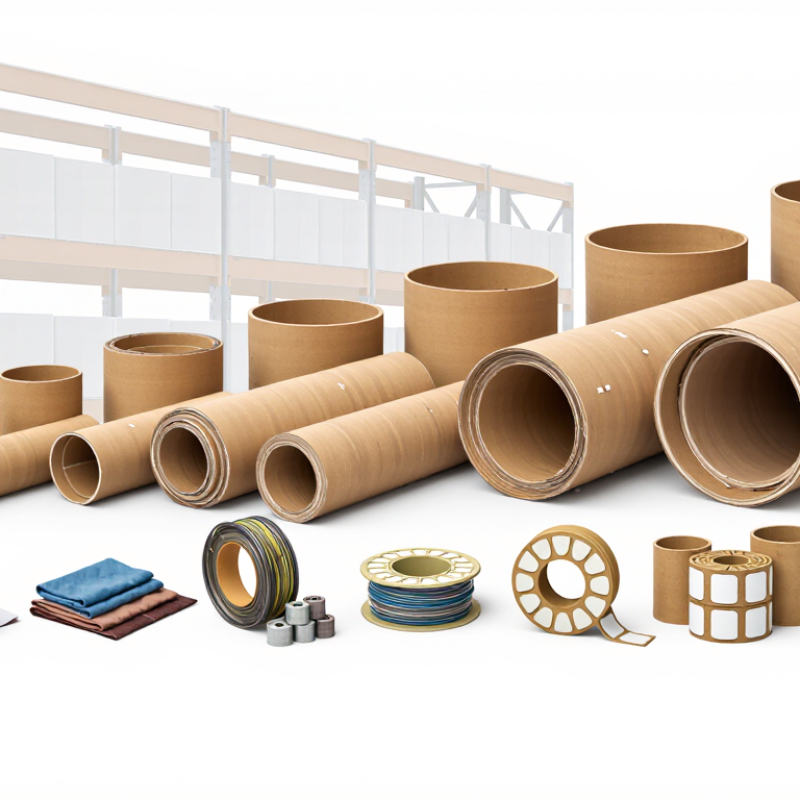
What Are the Top 10 Cardboard Tube Sizes?

How Cardboard Tube Dimensions Are Measured

What Are the Top 10 Cardboard Tube Sizes?

Cardboard tube dimensions are measured by inner diameter, outer diameter, wall thickness, and length. Inner diameter shows the available space inside the tube. Outer diameter describes the full width across the outside. Wall thickness equals half the difference between these two measurements.

Common nominal sizes include 1, 1.5, 2, 2.5, 3, 4, 5, 6, 8, and 12 inches in diameter. Lengths often range from 6 to 48 inches, although custom sizes are possible. A 3-inch tube may have a 3-inch inner diameter, but not always. Some suppliers list the outside diameter instead. This small difference can cause fitting problems. I recommend checking the specification sheet before ordering. Then, measure a sample with a caliper. A ruler may be adequate, but it can miss small variations. Paper layers compress slightly under pressure. Humidity can also change the tube’s firmness and dimensions.

Tips: Write down ID, OD, wall thickness, and length separately. Measure both tube openings. They may not be perfectly identical. Check the tube after cutting, because trimming can create rough edges or minor length changes. For protective packaging, leave enough internal clearance for the product and cushioning. For winding materials, focus on the core’s inner diameter and load capacity. A thicker wall usually improves strength, but it also reduces internal space. Do not assume “3 inches” means one universal measurement. Specification language needs careful attention.

The Ten Most Common Cardboard Tube Sizes

The Ten Most Common Cardboard Tube Sizes

Cardboard tubes are usually described by inside diameter and length, measured in inches. The ten sizes most often requested are 1.5 x 12, 2 x 12, 2 x 24, 3 x 12, 3 x 24, 3 x 36, 4 x 24, 4 x 36, 6 x 36, and 8 x 48 inches. These dimensions suit posters, drawings, mailing materials, fabric rolls, and lightweight product packaging. The actual outside diameter changes with wall thickness, so the listed size is not always the tube’s full width.

Small tubes, such as 1.5 x 12 inches, protect narrow prints and rolled documents. A 2 x 24 inch tube offers more room for thicker paper. The 3-inch options work well for architectural plans and classroom displays. Larger 4-inch tubes reduce tight curling on wide artwork. Six-inch and 8-inch tubes are better for bulky rolls or layered materials. Measure carefully.

In practical use, length matters as much as diameter. A 36-inch tube may protect a poster, but it can become awkward during storage. End caps should fit firmly without crushing the rim. I have found that inexpensive tubes sometimes soften in damp rooms. That detail is easy to miss. No universal size list fits every industry, because paper weight, wall strength, and shipping conditions change the best choice. A sample test remains worthwhile.

Small Cardboard Tubes for Lightweight Materials

Small cardboard tubes are often judged by diameter alone. For lightweight materials, that is not enough. Ten practical inner diameters are 10, 13, 16, 20, 25, 32, 38, 50, 63, and 76 millimeters. Lengths commonly range from 100 to 600 millimeters. Short tubes suit labels and sample rolls, while longer tubes protect posters, drawings, and thin textiles. These sizes cover many compact packing tasks without adding unnecessary weight.

Tube selection should match the material, not just the product name. Paper labels need a close fit, but a rolled poster needs clearance. For example, a 25-millimeter inner diameter may hold a narrow paper roll securely. Soft foam can need more space because it springs back after rolling.

Wall thickness also matters. A 1.5 to 3 millimeter wall often balances stiffness and low weight, though moisture can weaken ordinary cardboard. I check the inside diameter, length, edge finish, and compression resistance before approving a shipment. That hands-on check catches crushed rims and loose rolls.

I once chose a tube by outside diameter and created an awkward fit. The mistake was small, but the materials shifted during handling. Now I measure the packed roll first. Leave a few millimeters of clearance. Too much space is also a problem. It permits movement, dents, and noisy transport. For clean presentation, use dry storage and avoid stacking heavy cartons above small tubes. Specifications should state inner diameter, wall thickness, length, material grade, and tolerance. That detail makes purchasing more reliable, even when the first estimate is imperfect.

Medium Cardboard Tubes for Packaging and Crafting

Medium cardboard tubes are practical for packaging, model building, poster storage, and handmade projects. Their usual inner diameters range from 50 to 100 millimeters, with lengths between 300 and 900 millimeters. This size offers enough space for rolled prints, fabric, craft paper, and lightweight components. Fit matters. A tube should hold the item securely without crushing its edges.

For packaging, choose a wall thickness that matches the product’s weight and handling conditions. A thicker wall improves compression resistance during stacking, while a lighter tube keeps shipping costs lower. Add protective end caps when the contents have sharp corners or delicate surfaces. I have found that loose packing creates movement inside the tube, even when the outer shell looks strong. Kraft paper, tissue, or shaped inserts can reduce that movement. Measure twice.

Medium tubes also support many crafting uses. They can become desk organizers, puppet bodies, miniature columns, or storage cores for ribbon. Clean cuts require a sharp utility knife, a stable cutting surface, and slow pressure. For children’s projects, adults should handle cutting tools and remove rough edges. Moisture remains a weakness. Keep cardboard tubes away from damp work areas, because softened walls lose their shape quickly. Color, glue, and paint can also affect the surface, so testing one small section first is sensible. My own measurements are not always perfect, especially after cutting, but that is a useful reminder to allow a small fitting margin.

Large Cardboard Tubes for Industrial Applications

What Are the Top 10 Cardboard Tube Sizes?

Large cardboard tubes support demanding industrial work, including material winding, protective packaging, and concrete-form applications. Common internal diameters include 3, 4, 5, 6, 8, 10, 12, 15, 18, and 24 inches. However, no single size suits every operation. Tube length, wall thickness, paper grade, and winding direction also affect performance.

For heavy rolls, an 8- to 12-inch tube often provides a practical balance between strength and handling. Larger 15- to 24-inch tubes can support wide film, fabric, paper, or insulation rolls. Thick walls resist crushing during stacking and transport. Moisture-resistant coatings may help in damp warehouses, but they do not make cardboard waterproof. That detail is sometimes overlooked. Load weight should be tested with the actual winding tension and storage height. A tube that performs well on the production line may deform during long-term storage.

Tips: Measure the product core, winding tension, forklift space, and pallet height before ordering. Ask for compression and moisture test data. Small measurement errors can create expensive delays. In my view, engineers should request a sample run before approving a large batch. It is not always necessary, but it exposes weak edges, loose winding, or inconvenient tube length. Some specifications still need refinement after testing. That is normal in industrial packaging.

Scroll to Top