What Are the Best Types of Mailing Packaging?

Choosing the right mailing packaging means balancing protection, cost, presentation, and the journey each parcel must survive. A slim paper mailer may suit a soft T-shirt, while a rigid cardboard envelope helps keep prints flat. Fragile items often need a sturdy box, cushioning, and enough room to prevent movement. Small details matter.

This guide compares common options, including padded mailers, paper envelopes, poly mailers, cartons, and mailing tubes. It considers what each format protects well, where it may fall short, and how size and closure affect day-to-day packing. A snug fit can reduce shifting, but a box packed too tightly may leave little space for protective material. The best choice depends on the item, not just its price.

Materials deserve a closer look, too. Paper packaging can be convenient to sort for recycling where local facilities accept it, while mixed-material mailers may be harder to process. Check local guidance rather than assuming every recyclable-looking package belongs in the same bin. In practice, there is no perfect option for every order; a lightweight mailer can save space but may offer less structure. The sections ahead provide practical criteria for matching packaging to products, handling needs, and customer expectations.
What Are the Best Types of Mailing Packaging?

What Mailing Packaging Is and What It Protects

Mailing packaging is the outer mailer, envelope, or box that carries an item through sorting, handling, and delivery. It shields contents from scuffs, dust, moisture, and sudden knocks. The best choice depends on the item: a rigid box helps prevent crushing, while a padded mailer can cushion small, sturdy goods. Neither is foolproof.

Protection comes from a well-fitted package, not simply a thicker one. Too much empty space lets an item move and strike the walls; tight packing can also press fragile edges. The U.S. Environmental Protection Agency’s 2018 materials report says containers and packaging made up 82.2 million tons, or 28.1% of U.S. municipal solid waste. That figure is a useful reminder to avoid oversized boxes and unnecessary filler. ISTA’s 3A parcel-distribution test also reflects common shipping hazards, including vibration, drops, and compression. A real shipment may still meet conditions a test cannot fully predict.

Tips: Choose a mailer for flexible, durable items and a box for fragile or crushable ones. Wrap glass or sharp corners separately, then fill gaps so contents cannot rattle. Fit matters. Check the seal, too. A quick shake test helps, though it is not a substitute for testing valuable or delicate items under realistic shipping conditions.

Common Types of Mailing Packaging

Common Types of Mailing Packaging

Corrugated mailers and boxes suit heavier, fragile, or oddly shaped items. Their fluted layers help resist crushing, while a snug fit limits movement in transit. Oversized boxes can waste space and need extra cushioning, so measure the item before choosing one.

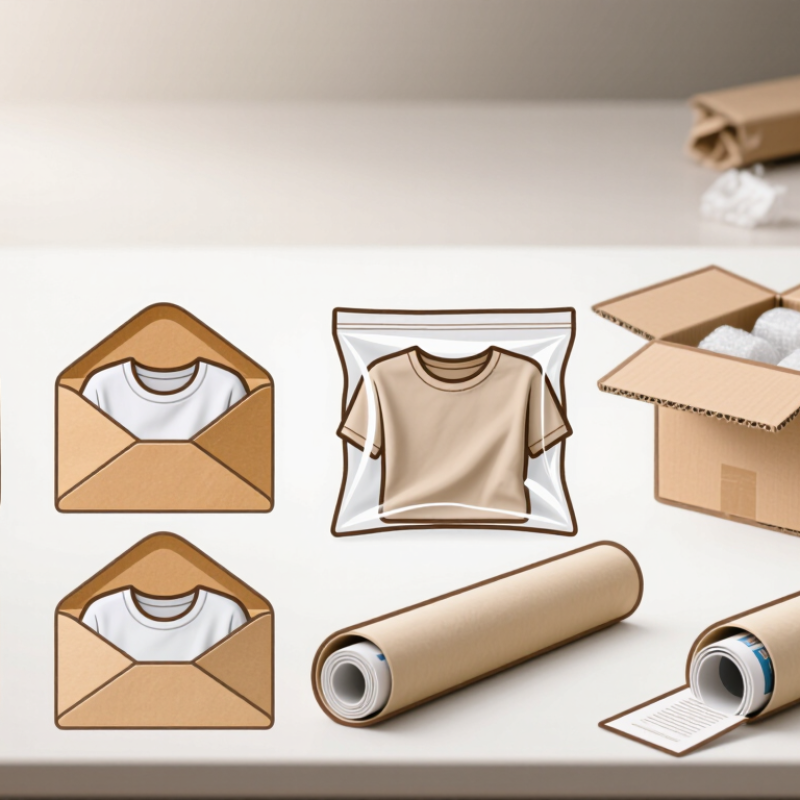
Padded mailers protect small goods with a soft inner lining. They are useful for items that can tolerate light pressure but may not prevent damage to delicate corners. Paperboard mailers offer a flatter, firmer option for documents, prints, or thin books. They resist bending better than a basic envelope. Rigid mailers add more protection, though they can be less flexible to pack.

Poly mailers are lightweight and flexible, making them suitable for soft goods such as clothing. They take up little storage space, but they are not a good choice for breakable contents. Padding matters. A practical check is to gently shake the packed parcel: if the contents slide or knock against the walls, add cushioning or choose a closer-fitting package. I might once have chosen packaging by weight alone; that misses shape and fragility. Match the mailer to the item, not just the postage.

Materials and Protective Features

Mailing packaging works best when its material matches the item’s weight, shape, and fragility. For documents, photographs, or flat fabric, a paper mailer with a stiff insert can resist bending without adding much bulk. A rigid mailer offers stronger edge protection, though its corners can still crease under heavy pressure. That matters.

For small, sturdy goods, a padded paper mailer can soften light impacts. Fragile items usually need a corrugated box, with cushioning that prevents movement; a loose item can strike the box walls during transit. Paper padding is easy to separate for recycling where local systems accept it, but it may provide less moisture resistance than plastic cushioning. A sealed inner sleeve can help protect products from damp conditions, while the outer package absorbs handling knocks. No material is perfect. Extra layers add weight and waste, and too little cushioning invites damage. A practical check is to gently shake the packed box: if the item shifts, add support around it, especially at the corners.

What Are the Best Types of Mailing Packaging? — Materials and Protective Features

Packaging Type Typical Materials Protective Features Moisture Protection Best Suited For Main Considerations
Corrugated Box Paperboard liners with a fluted paper layer between them Provides cushioning and resists compression; strength varies with board construction and box design Limited unless treated or paired with a moisture-resistant liner Heavier, fragile, or irregularly shaped items that need room for cushioning Choose a box that fits the item with adequate cushioning; oversized boxes may need more void fill
Flat Paper Mailer Kraft paper or other paper-based stock Helps protect against scuffs and light handling; offers little impact cushioning Generally low; paper can soften or tear when wet Documents, printed materials, and other flat, non-fragile items Not a good choice for items that can bend, break, or be damaged by moisture
Padded Paper Mailer Paper outer layers with a cushioning layer, such as recycled paper padding Provides light cushioning and helps reduce surface abrasion Usually limited unless the mailer has a water-resistant coating Small, moderately robust items that need more protection than a flat envelope provides Protection depends on padding thickness; may not prevent damage from strong impacts
Bubble Mailer Paper or polyethylene outer layer with a bubble-cushion lining Bubble lining cushions against minor knocks and helps protect surfaces from scratches Polyethylene versions resist splashes; paper versions are less moisture resistant Small, lightweight items that are not highly fragile Does not provide the same crush protection as a well-packed box
Poly Mailer Flexible polyethylene film, sometimes made with recycled content Resists tearing and keeps contents contained; provides little cushioning Typically good resistance to rain and splashes when the closure is properly sealed Soft goods and other lightweight, non-fragile products Not suitable on its own for brittle items or products needing impact protection
Rigid Mailer Heavy paperboard or chipboard, sometimes with a paper exterior Resists bending and helps keep flat contents from creasing Usually limited unless the surface or closure has added moisture protection Photographs, certificates, artwork, and other flat items vulnerable to bending Offers little cushioning against impact; select a size that prevents contents from shifting
Protection depends on the exact material, construction, fit, closure, and packing method. For fragile items, use cushioning and a suitably sized outer container.

How to Choose Packaging for Different Items

Choose packaging by the item’s shape, weight, and fragility. Soft clothing usually needs a flexible mailer; books and flat prints benefit from rigid mailers that protect edges. Small, sturdy objects can travel in padded mailers. For glass or ceramic items, use a snug corrugated box, cushion every side, and stop the contents from shifting. Liquids need sealed inner containers and a leak-resistant secondary bag. Test the packed item with a gentle shake. Movement is a warning.

Right-sizing matters, too. A box that is much larger than its contents needs extra fill and may still allow impact damage. The U.S. EPA’s 2018 materials report recorded 82.2 million tons of containers and packaging in municipal solid waste, with 28.1% recycled. That broad figure is not specific to mailing parcels, but it underlines why avoiding unnecessary material is worth considering. ISTA 3A testing addresses parcel-shipping hazards such as vibration and shock, a useful reference when evaluating protective packaging. Small details matter. In practice, people often over-cushion light items; I’d check the fit before adding more. A snug pack is not always a safe pack, though—fragile corners still need protection.

Comparing Cost, Durability, and Sustainability

Choosing mailing packaging means weighing the invoice against the parcel’s journey and its end-of-life options. Poly mailers are light and often economical for soft goods, but they offer little protection from sharp corners or crushing. Paper mailers are easy to handle and can suit flat items, though they may tear when wet. Corrugated boxes protect fragile products better, but extra material and empty space can increase shipping costs. Right-sizing matters.

Durability can prevent costly damage, yet stronger packaging is not automatically greener. The U.S. Environmental Protection Agency’s 2018 materials data recorded a 96.5% recycling rate for corrugated boxes; that figure describes U.S. recovery, not what every local collection program accepts. The American Forest & Paper Association reported a 93.6% corrugated-cardboard recycling rate for 2022.

Those numbers make fiber packaging a strong option where recycling access exists. Still, a box assembled from mixed materials may be harder to sort, and lightweight plastic can use less material per shipment. Light, but not invincible.

Compare packaging by item weight, fragility, shipping dimensions, and local recycling access. A snug paper mailer may beat an oversized box for a sturdy book; a fragile ceramic item needs cushioning, even if that adds material.

There is no perfect choice, and that trade-off is easy to underestimate.

Scroll to Top