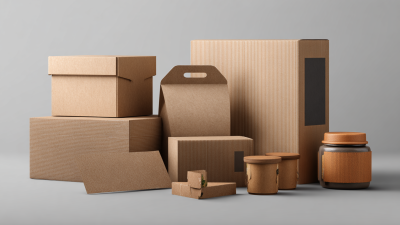
How to Choose Cardboard for Shipping?
Choosing cardboard for shipping is not merely a matter of picking the thickest box. The right material depends on product weight, dimensions, fragility, delivery distance, and storage conditions. A small ceramic cup needs different protection from a lightweight sweatshirt. Moisture and repeated handling also matter.
Professor Jay Singh, a packaging specialist at California Polytechnic State University, states, “The right package protects the product with the least amount of material.” This principle gives buyers a useful starting point. Strong cardboard can reduce damage, but excessive material may increase cost, storage space, and environmental impact. Thicker is not always better.
For reliable cardboard for shipping, compare single-wall and double-wall corrugated board. Check the edge crush test rating when stacking strength matters. Consider burst strength when punctures or rough handling are likely. Measure the product carefully, leaving enough room for cushioning without allowing movement. An oversized box can fail during transport because the contents shift inside.
Real shipping conditions are often less gentle than expected. Boxes may face rain, warehouse pressure, vibration, and sudden drops. Testing one packed sample can reveal weak corners or excessive empty space. Still, one test is not enough for every route. This is where judgment becomes important. A packaging choice that works locally may perform poorly across a long supply chain. Review results, adjust the design, and avoid assuming that a familiar box is automatically the best answer.

Define the Product, Weight, and Shipping Conditions
How to Choose Cardboard for Shipping?
Define the Product, Weight, and Shipping Conditions
Start with the product, not the box. Measure its length, width, height, and fragile points. Glass, electronics, cosmetics, and metal parts need different cushioning and board strength. A narrow item may need internal dividers. A loose item may need paper or molded protection. Product weight also matters. Heavy contents require stronger compression resistance, not simply thicker cardboard.
Shipping conditions can change the specification. Consider stacking, conveyor drops, vibration, humidity, temperature, and delivery distance. The International Safe Transit Association identifies these hazards as key parts of transit testing. Single-wall board may suit light products and short routes. Double-wall board is safer for heavier contents or warehouse stacking. However, thicker board increases size, cost, and material use. It is not automatically better.
Industry data supports careful material selection. The Fibre Box Association reported approximately 390 billion square feet of corrugated shipments in 2023, showing the scale of everyday box use. The U.S. Environmental Protection Agency reported a 96.5% recycling rate for corrugated containers in its Facts and Figures report. Recyclability still depends on clean, dry fiber. That detail is easy to miss. In practical packing reviews, teams often test only a drop. ISTA procedures also emphasize vibration, compression, and atmospheric conditioning. A box can survive one drop and fail during a wet, stacked journey. Define the real route, then test a sample under those conditions.
Understand Cardboard Grades, Flute Types, and Strength Ratings
How to Choose Cardboard for Shipping?
Cardboard choice starts with the grade, not its appearance. Single-wall board suits books, clothing, and other light parcels. Double-wall board adds another fluted layer for heavier or fragile goods. The Fibre Box Association reported about 386 billion square feet of corrugated production in 2023. That scale reflects its importance, but volume does not guarantee quality.
Flute type controls cushioning and stacking behavior. C flute, around 3/16 inch high, offers balanced protection. B flute is thinner and resists crushing during handling. E flute creates a smoother print surface for small cartons. Heavy products may need a double-wall C/B combination. Strength ratings require careful reading. A 32 ECT board resists 32 pounds per inch under the edge-crush test. It does not mean the box safely holds 32 pounds. Mullen ratings measure puncture and bursting resistance instead. ASTM D4727 provides test guidance, while ISTA transit tests examine vibration, drops, and compression.
Tips: Match the board to product weight, dimensions, stacking time, and moisture exposure. Leave limited empty space. Too much filler can increase movement, while too little can cause panel collapse. In practice, I would test a sealed sample through repeated drops before ordering in bulk. A rating alone is not enough. Real shipping routes are messier than laboratory conditions, and this is where many packaging decisions need reconsideration.
Match Box Size and Design to the Product’s Protection Needs
Choosing cardboard for shipping starts with the product, not the box supplier. Measure the item, its weight, and its vulnerable surfaces. A ceramic cup needs compression resistance and cushioning around its walls. A book usually needs edge protection and a snug fit. Oversized boxes allow movement, while undersized boxes transfer impact directly to the product. Both choices can fail.
Not every failure is dramatic. A crushed corner, loose seal, or small internal gap may create a return.
The NRF and Appriss Retail 2023 Consumer Returns in the Retail Industry report estimated $743 billion in merchandise was returned in the United States during 2023, representing 14.5% of retail sales.
Better box design can reduce avoidable damage within that costly flow. Select single-wall corrugated cardboard for lighter, stable items. Consider double-wall construction for heavier products, long-distance transport, or stacked shipments.
Flute selection also matters. Larger flutes can improve cushioning, while smaller flutes provide cleaner surfaces and better print stability.
Match the box’s internal dimensions closely. A two-centimeter gap can become a dangerous runway during handling. Use paper-based void fill when movement remains possible. For fragile products, test the packed box through compression, vibration, and drop conditions. ISTA transport-testing procedures provide a practical reference for these evaluations.
The U.S. EPA’s 2018 Facts and Figures report recorded 82.2 million tons of containers and packaging in municipal solid waste, equal to 28.1% of the total. Less excess cardboard helps.
I still see teams choose thicker board first, then discover the design is wrong. Material strength cannot repair poor sizing.
Compare Durability, Sustainability, and Shipping Costs
Choosing cardboard for shipping means balancing durability, sustainability, and shipping costs rather than selecting the thickest box. A double-wall board offers stronger compression resistance for heavy or fragile products. However, a single-wall box may perform well when the item is light and properly cushioned. The Edge Crush Test rating helps compare stacking strength. Still, laboratory results cannot fully predict humidity, rough handling, or a wet loading dock.
Sustainability also depends on material efficiency. The U.S. Environmental Protection Agency reported a 96.5% recycling rate for corrugated boxes in its 2018 Facts and Figures report. Recycled fiber can reduce demand for virgin material, but excessive recycled content may lower strength after repeated processing. Right-sizing matters too. A smaller box uses less board and needs less void fill. It also leaves less empty space in delivery trucks. That detail is easy to overlook.
Shipping costs can change sharply with dimensions. Published carrier pricing systems commonly charge dimensional weight when a parcel occupies more space than its actual weight suggests. A box measuring 40 × 30 × 20 centimeters can cost more than a compact, heavier package. Measure the packed product, not the product alone. I would test three board grades with ISTA-style vibration, compression, and drop procedures before choosing. The thickest option may survive beautifully, yet waste money. My own first choice would be the lightest board that protects the product consistently, not perfectly.
How to Choose Cardboard for Shipping?
Comparison of durability, sustainability, and shipping-cost efficiency
The scores use a 0–100 planning scale based on typical corrugated-board characteristics. Double-wall board generally provides the highest compression and impact resistance, while lighter recycled single-wall board can reduce package weight and material use. Actual shipping costs depend on box dimensions, shipment zone, carrier pricing, and local material prices.
Test the Packaging Before Choosing the Final Cardboard Type
How to Choose Cardboard for Shipping?
Test the Packaging Before Choosing the Final Cardboard Type
Choosing cardboard by appearance alone can create expensive shipping problems. A sturdy-looking box may crush under stacked parcels. A lighter box may perform better when its structure matches the product.
Start with a realistic sample. Use the actual product, inner padding, labels, and sealing method. Measure the packed weight and record the box dimensions. Then perform drop tests from several angles and heights. Watch the corners closely. They often show damage first.
Test compression by placing filled boxes beneath a controlled load. This reveals whether the cardboard can handle warehouse stacking. A vibration test can expose movement, rubbing, and weak seals during transport. If the shipment may face moisture, place samples in a humid environment before testing. Small changes matter.
Check the product after every test, not only the box. Look for dents, loose parts, torn flaps, and shifting contents. My first trial once passed a drop test but failed after repeated vibration. The cardboard was acceptable; the internal fit was not. That mistake changed the design more than a thicker sheet would have. Testing several cardboard grades also helps compare protection, weight, and material use honestly. A test can still mislead. Real shipping conditions are rarely gentle.
| Cardboard Type | Typical Construction | Relative Protection | Typical Shipping Use | Key Strengths | Potential Limitations | Recommended Pre-Selection Tests |
|---|---|---|---|---|---|---|
| Single-Wall Corrugated Board | One fluted medium bonded between two linerboards | Moderate | Light to medium-weight products, retail cartons, books, household goods | Lightweight, economical, recyclable, easy to die-cut and print | Less resistant to compression, puncture, and repeated impacts than multi-wall board | Box Compression Test (BCT), Edge Crush Test (ECT), vibration test, and drop test |
| Double-Wall Corrugated Board | Two fluted mediums and three linerboards | High | Heavier products, fragile goods, longer-distance shipping, stacked cartons | Higher stacking strength and cushioning than single-wall construction | Heavier, thicker, and usually more expensive; may require larger storage space | BCT under expected stacking load, concentrated-load test, drop test, and humidity conditioning |
| Triple-Wall Corrugated Board | Three fluted mediums and four linerboards | Very high | Industrial parts, dense products, bulk shipments, high-load applications | Excellent compression resistance, rigidity, and load-bearing capacity | High material weight and cost; excessive for small or lightweight products | BCT, edge-crush testing, forklift-handling simulation, vibration, and impact testing |
| Regular Slotted Container (RSC) | Common corrugated-box style with flaps meeting at the center | Depends on board grade | General parcel shipping and warehouse distribution | Efficient production, simple assembly, and good material utilization | Flap overlap, empty space, and poor sealing can reduce performance | Finished-box compression, drop testing on corners and edges, and seal-strength checks |
| Full-Overlap Box | Flaps fully overlap across the top and bottom panels | High | Heavy, fragile, or compression-sensitive products | Extra board layers improve top-to-bottom strength and puncture resistance | Uses more material and may require more packing or closing time | Top-load compression, puncture resistance, edge-drop testing, and closure testing |
| Molded Fiber or Paperboard Insert System | Formed fiber components used inside an outer shipping carton | Protective support inside the box | Products requiring separation, immobilization, or cushioning | Reduces product movement and can replace some plastic cushioning materials | Moisture sensitivity and dimensional variation may affect fit and protection | Product-to-insert fit check, vibration, shock/drop testing, and humidity conditioning |
| Moisture-Resistant Corrugated Board | Corrugated board with moisture-resistant treatment or suitable coated components | High in damp conditions | Cold-chain distribution, humid warehouses, and transport exposed to condensation | Retains more strength than standard board when exposed to moisture | Coatings can affect recyclability; water resistance is not the same as waterproofing | Humidity conditioning, wet compression testing, water-exposure testing, and seal inspection |
| Lightweight High-Performance Corrugated Board | Lower basis-weight liners and medium engineered for strength efficiency | Moderate to high | Weight-sensitive parcels and optimized e-commerce packaging | Can reduce package weight while maintaining required compression performance | Performance depends strongly on flute design, board quality, and converting accuracy | ECT and BCT comparison against the current carton, plus drop and vibration testing |
| Testing note: Use the finished carton, product, closure method, and actual internal packaging during evaluation. ASTM D5276 is commonly used for free-fall drop testing, ASTM D4169 provides distribution-cycle guidance, ASTM D4577 covers compression testing of shipping containers, and TAPPI T811 is commonly used for edgewise compressive strength testing. Actual results vary with board grade, flute profile, dimensions, moisture, joints, and loading pattern. | ||||||
Related Posts
-
Essential Guide to Eco-Friendly Postal Packaging: Sustainable Solutions for Modern Shipping
-
How to Choose the Best Cardboard Packaging for Your Products?
-
Discover the Benefits of Heavy Duty Cardboard Tubes for Your Business?
-

What Are the Benefits of Using Carton Tubes for Packaging?
-

The Ultimate Guide to Choosing the Best Tube Mailing Boxes for Your Business Needs
-
Top 10 Postal Tubes for Safe and Secure Shipping in 2023