2026 Best Postal Tube Sizes for Global Shipping?
Choosing the right postal tube sizes for global shipping is more than matching paper length. Tube diameter, wall strength, closure design, and parcel weight can affect handling, postage, and delivery safety. In 2026, senders must also consider dimensional pricing, automated sorting systems, and different carrier specifications. A tube that works for a local poster may become expensive or unstable on an international route.
This guide examines practical postal tube sizes for documents, posters, prints, blueprints, and rolled textiles. It compares common dimensions, usable interior space, and protection levels. A 610 mm tube may suit an A1 print, while a narrower 450 mm tube could reduce movement around smaller artwork. Small details matter. End caps should fit tightly. The contents should not bend under light pressure. Empty space needs careful filling, but overpacking can create unnecessary weight.
Our recommendations draw on packaging practice, carrier guidance, and real handling concerns. Still, no single size fits every destination. Postal rules and prices can change. Packaging tests may reveal weaknesses that specifications miss. That is worth admitting. Before shipping, measure the sealed tube, check the destination carrier’s limits, and confirm the declared contents accurately. Reliable preparation protects the item and supports smoother customs processing. The best choice balances protection, cost, sustainability, and the recipient’s experience.
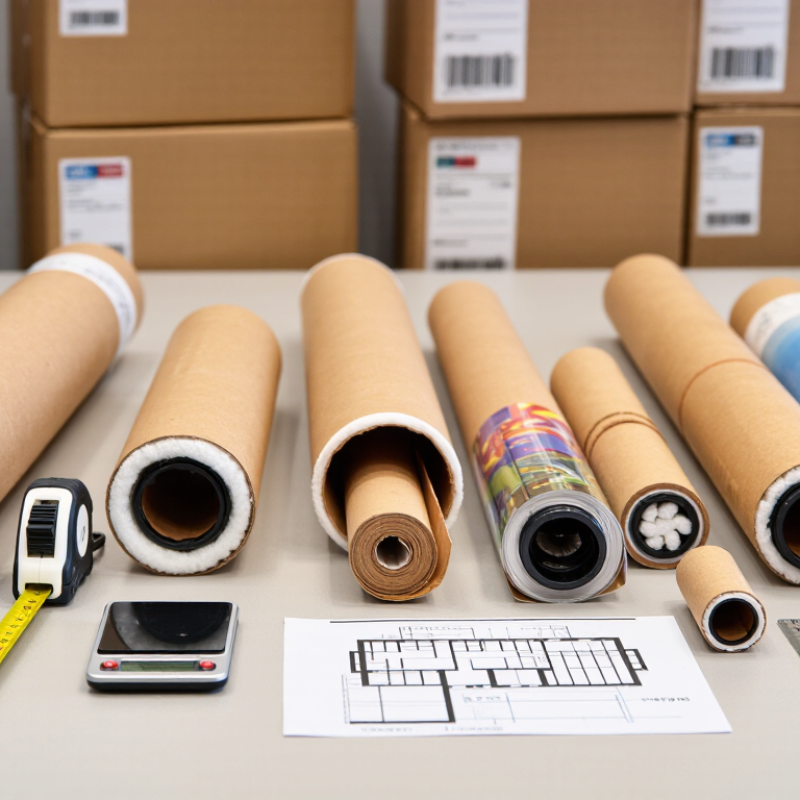
Postal Tube Dimensions Explained: Length, Diameter, and Wall Thickness
Choosing a postal tube starts with the artwork, not the carton. ISO 216 sets A1 paper at 594 × 841 mm, so an A1 print needs a tube longer than 841 mm. Allow 20–40 mm for end caps and handling. Common working sizes include 450, 600, 900, and 1,000 mm lengths, with diameters from 50 to 100 mm.
Diameter affects rolling quality. A 50 mm tube suits posters and drawings with flexible paper. A 75 mm diameter reduces tight curling and is safer for heavier stock. Canvas, laminated sheets, or several prints may need 100 mm. Wall thickness usually ranges from 1.5 to 3 mm. Thicker walls resist crushing, but they also increase dimensional weight and shipping cost. The packaging may become stronger than necessary.
The 2023 Pitney Bowes Parcel Shipping Index reported approximately 161.8 billion parcels worldwide in 2022, showing why efficient dimensions matter. Postal networks still calculate limits differently. The Universal Postal Union Parcel Post Manual advises checking maximum length, girth, and weight before dispatch. A practical test is simple: roll one sample, shake the capped tube, then measure its final length and circumference. It should not slide inside. It should not bulge either. This part is easy to overlook. My own preferred starting point is a 75 mm tube with a 2 mm wall, then adjust after a real drop and compression test.
Match Tube Size to the Item and Allowance for Protective Padding
2026 Best Postal Tube Sizes for Global Shipping?
Match the tube to the item, then reserve space for protection. The 2023 Pitney Bowes Parcel Shipping Index recorded 161.8 billion parcels worldwide in 2022. That volume shows why consistent sizing matters across postal networks.
Measure the item’s longest side and add padding clearance before choosing a tube. A rolled A2 print needs roughly 50 millimetres of internal diameter when using light tissue and a rigid insert. For heavier paper, allow more room. Too tight, and corners may crease during compression. Too loose, and the contents can slide, creating impact damage.
Use internal dimensions, not external measurements. Allow 3–5 centimetres of extra length for end caps and cushioning. A 70-centimetre document may therefore need an internal tube length near 75 centimetres. Check the carrier’s maximum length and length-plus-girth rule for each destination. These limits vary.
The Universal Postal Union identifies reliability as a key postal development measure. Tube design supports that reliability. Still, a perfect calculation is not enough. Drop-test a filled sample, including empty-looking gaps. Real handling is rarely gentle. One practical review is worth more than confident guesswork. Cite the UPU Postal Development Report 2023 and the Pitney Bowes Parcel Shipping Index 2023 when documenting your packaging decision.
2026 Best Postal Tube Sizes for Global Shipping? - Match Tube Size to the Item and Allowance for Protective Padding
Use the item’s rolled dimensions to choose a tube with enough interior space for protective padding. Dimensions below are recommended internal tube dimensions; actual tube availability varies by market.
| Typical item |
Approximate rolled item size
(diameter × length) |
Suggested padding allowance |
Recommended minimum tube size
(internal diameter × length) |
Packing guidance |
| A4 prints, certificates, or small posters |
35–45 mm × 220 mm
(1.4–1.8 in × 8.7 in) |
About 10 mm radial clearance and 25 mm at each end |
60 mm × 280 mm
(2.4 in × 11.0 in) |
Roll loosely with the printed surface protected by a clean interleaf sheet. |
| A3 artwork or medium-format prints |
40–55 mm × 320 mm
(1.6–2.2 in × 12.6 in) |
About 10 mm radial clearance and 25 mm at each end |
70 mm × 380 mm
(2.8 in × 15.0 in) |
Use a broad core or loose roll to reduce curl and pressure on the artwork. |
| A2 posters or presentation graphics |
50–65 mm × 450 mm
(2.0–2.6 in × 17.7 in) |
About 10 mm radial clearance and 25 mm at each end |
80 mm × 510 mm
(3.1 in × 20.1 in) |
Check the rolled diameter with the actual paper stock; heavier media can form a wider roll. |
| A1 posters, plans, or maps |
60–80 mm × 620 mm
(2.4–3.1 in × 24.4 in) |
About 10 mm radial clearance and 25 mm at each end |
100 mm × 680 mm
(3.9 in × 26.8 in) |
Keep the roll centered so the ends do not press against the tube caps. |
| A0 plans, large maps, or display graphics |
75–100 mm × 870 mm
(3.0–3.9 in × 34.3 in) |
About 10–15 mm radial clearance and 25 mm at each end |
125 mm × 930 mm
(4.9 in × 36.6 in) |
For brittle or valuable sheets, add a protective wrap without compressing the roll. |
| Long-format drawings, banners, or rolled documents |
60–90 mm × 1,050 mm
(2.4–3.5 in × 41.3 in) |
About 10–15 mm radial clearance and 25 mm at each end |
115 mm × 1,110 mm
(4.5 in × 43.7 in) |
Confirm the destination carrier’s permitted parcel length and length-plus-girth limits before dispatch. |
Measurement note: Tube sizes shown are internal dimensions. Allowances are practical starting points, not universal carrier rules. Measure the finished roll, including any wrap, and select a tube with clearance; do not force the item inside. Postal and customs requirements, maximum dimensions, and accepted parcel formats vary by destination and service.
Choose Tube Diameter for Document Formats and Roll Stability
2026 Best Postal Tube Sizes for Global Shipping?
For rolled documents, tube diameter affects more than appearance. It influences curl memory, edge pressure, and movement during transit. A tube that barely fits may flatten corners when parcels are stacked. A wider tube protects the sheet but permits unwanted shifting. Measure the roll’s outer diameter, not its flat width. Add 10 to 20 millimeters of clearance for smooth insertion and light protective wrapping. This small gap should not let the document rattle.
Thin A4 and A3 sheets often remain stable in 50–60 millimeter tubes. Posters, maps, and heavier drawings may need 75 millimeters or more. Large engineering sheets usually benefit from 90–100 millimeter diameters, especially when rolled around a soft core. Paper weight changes everything. A thick coated sheet may resist tight rolling, while lightweight paper can collapse inside an oversized tube. Test one packed sample before preparing a full shipment. It is a simple step, but I have skipped it before.
Roll the document gently with the printed surface facing inward when the material allows. Use a firm inner core to prevent a loose center. End caps should fit tightly without crushing the tube wall. For long journeys, check whether the roll slides during repeated tilting. If it moves noticeably, reduce the internal space or add clean, acid-free cushioning. Diameter alone cannot guarantee stability; the document, core, tube length, and packing method must work together.
Check Carrier Limits: UPS Allows Up to 108-Inch Length and 165-Inch Combined Length and Girth
For global shipping, treat 108 inches of length and 165 inches for combined length and girth as hard ceilings, not ideal tube sizes. Measure the finished package, including its end caps. For a round tube, girth is the distance around its widest point. Add that measurement to the tube’s length to check the combined limit. A 108-inch tube leaves only 57 inches for girth, so a wider tube may exceed the allowance even when its length fits.
Leave room for measurement differences. End caps can add length, and a soft tube may bulge under pressure. A tape measure around the widest section is more reliable than estimating from the tube’s diameter. Some services or destinations may apply lower limits, extra handling charges, or different measurement rules. Check the current terms for the specific service before packing. A snug fit helps. Still, I would avoid designing right at the maximum; a small measurement error can turn an acceptable parcel into a costly delay.
Compare Tube Materials and Closures for International Transit Durability
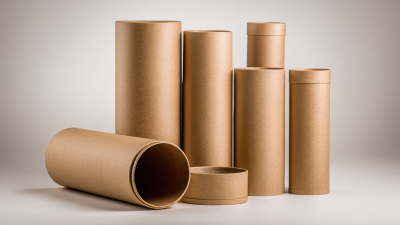
For international transit, tube durability depends on wall construction and closure fit, not diameter alone. Spiral-wound kraft tubes resist crushing better than thin, single-wall paperboard, while plastic tubes tolerate moisture but may flex under heavy stacking. A 76-millimeter tube with a snug end cap can protect rolled prints, yet oversized caps may loosen after repeated handling. Small details matter.
The World Shipping Council’s 2024 Containers Lost at Sea report recorded 2215 containers lost on average annually over the preceding 16 years. A postal tube is not a shipping container, but that figure reflects the physical uncertainty of global transport. Choose closures that stay seated under vibration: friction-fit plugs suit light contents, while taped or crimped ends add security for longer routes. Test packed samples with drop and compression methods such as those described in ISTA procedures. Humidity can soften paperboard, so add a moisture barrier when routes include wet ports or prolonged storage. Not perfect, but practical.
Before shipment, check that the tube does not telescope, buckle, or let the contents slide. Measure the packed diameter, including caps, because automated sorting equipment handles the outside dimensions. A few millimeters can matter.