
What Are 10 Cardboard Packaging Tips for Global Buyers?
Global buyers often treat cardboard packaging as a simple box decision. In practice, it affects product protection, shipping efficiency, warehouse handling, and customer perception. A box that performs well in a dry local warehouse may soften during a humid ocean journey. Small design choices can create large costs.
This guide presents ten practical cardboard packaging tips for international purchasing teams. It covers board grades, flute profiles, box dimensions, compression strength, moisture exposure, printing quality, inserts, pallet efficiency, testing, and supplier communication. Each area deserves attention. Measure the product carefully. Leave only useful clearance. Avoid oversized cartons.
Real procurement experience shows that packaging specifications must be clear and measurable. Terms such as “strong,” “eco-friendly,” or “premium” can mean different things to different suppliers. Request material details, sample cartons, production photos, and test evidence when appropriate. Recognized transit-testing methods can reveal weaknesses before shipment. Still, no test predicts every route perfectly.
That matters.
A carton may pass a warehouse drop test but fail under stacking pressure. A beautiful print may hide weak board construction. Recycled content can support sustainability goals, yet moisture resistance and structural performance still require review. Global buyers should compare total packaging value, not only the unit price. Freight space, damage rates, storage conditions, and reordering consistency all influence the final result. These ten tips offer a practical starting point, while leaving room for product-specific judgment and honest supplier discussions.
Define Product, Market, and Shipping Requirements
What Are 10 Cardboard Packaging Tips for Global Buyers?
Define Product, Market, and Shipping Requirements
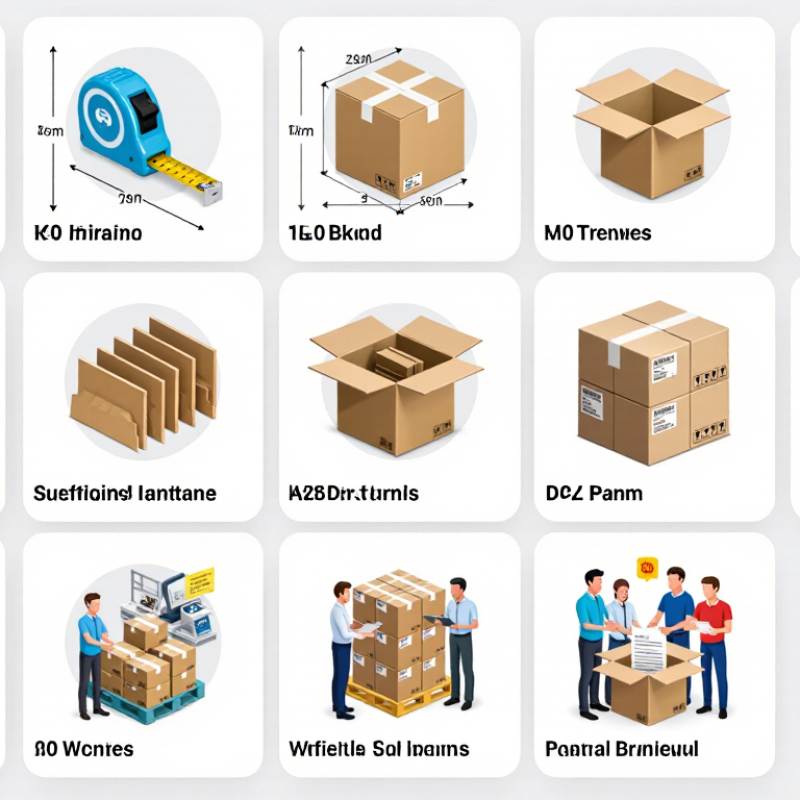
For global buyers, cardboard selection starts with the product, not the box. Record unit weight, dimensions, fragility, surface finish, and expected shelf life. Glass-like parts need separators, while powdery goods need dust-resistant inner protection. Define the product’s center of gravity too. Keep it measurable. In sourcing reviews, missing weight data often causes repeated carton redesigns and higher freight costs.
Market requirements can change the correct board grade. Humid coastal markets may need moisture-resistant treatment, while dry inland routes may not. Retailers can also set limits for carton size, print coverage, recycled content, and pallet overhang. The European Paper Recycling Council reported a 79.5% paper recycling rate in Europe in 2022. That figure comes from its 2023 Monitoring Report. Do not treat it as universal. Local collection reality matters.
Shipping decisions need measurable tests. Calculate packed dimensions, pallet cube, compression strength, and container loading before approving samples. Use recognized protocols such as ASTM D4169 or ISTA procedures, then test after humidity conditioning. Corrugated edge-crush and box-compression values should match stacking duration, not only laboratory strength. The World Bank’s What a Waste 2.0 estimates 2.01 billion tonnes of municipal solid waste annually worldwide. It also warns that 33% is not managed safely. Less material is not always better. A thinner box that collapses creates damage, rework, and hidden emissions. Recheck the design after the first shipment.
Choose Cardboard Grades for Strength and Sustainability
Global buyers should choose cardboard grades by load, climate, and handling route, not appearance alone. In packaging trials, I compare basis weight, edge crush test (ECT), and bursting strength before approving a grade. ECT indicates stacking resistance, while bursting strength helps assess puncture risk. Keep this distinction clear. For higher-risk shipments, verify supplier data with an independent laboratory. A double-wall board may protect heavy goods, yet it can increase material use and freight volume. For lighter items, a strong single-wall grade with a suitable flute may perform better.
Sustainability starts with using the right amount of fiber. Ask suppliers for recycled content, fiber origin, moisture resistance, and recycling guidance for the destination market. Recycled fibers can reduce virgin material demand, but repeated processing may shorten fiber length and reduce strength. This trade-off needs testing. A humid sea route can soften ordinary board, especially when cartons sit near container floors. Use moisture-resistant treatment only when necessary, because coatings may complicate recycling. Small changes matter.
Request samples made with the proposed grade, flute, dimensions, and closure method. Test filled cartons through compression, vibration, and drop trials that reflect real distribution. I once selected a lighter board after a successful warehouse test. It failed after three days in humid transit. That choice was wrong. Build a safety margin, but review it when product weight, stacking time, or climate changes.
| No. | Packaging Tip | Recommended Cardboard Grade or Structure | Typical Strength or Performance Consideration | Sustainability Advantage | Buyer Action |
|---|---|---|---|---|---|
| 1 | Match the grade to product weight | Single-wall corrugated board for light to medium products; double-wall board for heavier or fragile products. | Use edge crush test (ECT), box compression test (BCT), and product weight rather than paper thickness alone. | Avoids unnecessary material use and reduces shipping weight. | Request test results for the exact board combination and box size. |
| 2 | Select the flute profile for the application | E-flute for retail presentation and small products; B-flute for general shipping; C-flute for cushioning and stacking. | E-flute is typically about 1.5 mm thick, B-flute about 3 mm, and C-flute about 4 mm, with variation by specification. | The right flute can provide protection without defaulting to a heavier board. | Consider product fragility, stacking height, and available internal space. |
| 3 | Use double-wall board for demanding transport | Five-ply double-wall construction, such as BC or EB combinations, for heavy, fragile, or export shipments. | Two corrugated mediums and three liners generally improve stacking strength and puncture resistance compared with single-wall board. | Can reduce product damage and the environmental cost of replacement shipments. | Validate compression performance under expected warehouse and container conditions. |
| 4 | Choose recycled content carefully | Recycled-fiber liner and medium where strength requirements and moisture exposure permit. | Recycled fibers can be shorter after repeated recycling, so compression and wet-strength requirements must be verified. | Supports fiber circularity and can reduce reliance on virgin fiber. | Specify the minimum recycled-content percentage and request supporting documentation. |
| 5 | Protect packaging from humidity | Moisture-resistant corrugated board or an appropriate water-based coating for humid routes and cold-chain conditions. | Paper-based board loses compression strength as moisture rises; performance should be tested at expected relative humidity. | A recyclable water-based coating is generally preferable to hard-to-separate plastic laminates. | Define humidity, temperature, and transit-duration requirements before approval. |
| 6 | Optimize box dimensions | Right-sized single-wall or double-wall box with minimal empty space and suitable internal protection. | Smaller dimensions can improve pallet utilization, reduce panel area, and limit product movement. | Reduces board consumption, void fill, and transport-related emissions. | Compare internal dimensions, packed weight, pallet pattern, and container cube utilization. |
| 7 | Design for automated packing | Consistent board caliper, accurate creases, and regular slotted cartons with dimensions suited to the packing line. | Dimensional consistency supports reliable forming, sealing, and barcode reading. | Fewer machine stoppages and rejected cartons reduce material waste. | Share machine specifications, crease tolerances, and sample-line requirements with the supplier. |
| 8 | Limit mixed materials | Uncoated or easily repulpable corrugated board with water-based inks and paper-based components where possible. | Avoiding non-paper laminates simplifies sorting and recycling after use. | Paper-based packaging is widely recyclable when it is clean, dry, and accepted by local systems. | Confirm recyclability claims against the destination market's collection facilities. |
| 9 | Specify print and ink requirements | Flexographic printing with water-based inks for most corrugated shipping cartons; higher-quality liner grades for detailed graphics. | Print coverage, ink moisture, and coating choices can affect appearance, scuff resistance, and recyclability. | Water-based inks and limited coverage can reduce chemical use and preserve fiber recovery. | Approve a physical color proof and define acceptable color and registration tolerances. |
| 10 | Test the complete export package | Final board grade, box style, closure method, cushioning, pallet pattern, and load configuration tested together. | Distribution testing may include vibration, compression, impact, and environmental conditioning based on the shipping profile. | Performance testing helps prevent over-packaging while reducing damage and returns. | Test a production-intent sample before mass ordering and retain the approved specification. |
Design Packaging Dimensions for Protection and Efficiency
For global buyers, packaging dimensions should begin with product measurements, not a standard carton. Measure length, width, and height at the widest points, including handles, caps, and protective parts. Add controlled clearance of 5–10 millimeters, but do not treat this range as universal. Fragile items may need more space for cushioning, while rigid products often need less. Internal dimensions protect the product; external dimensions affect freight, storage, and pallet efficiency. A small error can create crushed corners or expensive empty space.
Use a simple dimensional trial before approving production. Place a sample product inside the carton with the planned inserts, then check movement on every side. No movement is ideal. However, too little clearance can also cause pressure damage. Test the packed unit with compression, vibration, and drop simulations suited to its weight and route. Record the carton condition, product position, and failure point. For humid routes, allow for board strength loss and consider a moisture-resistant structure suitable for the intended use.
Carton dimensions should also follow pallet patterns and container limits. Keep heavy units low, align seams carefully, and avoid narrow overhangs that fail under stacking. A slightly taller carton may improve cube use, but it can reduce stability. I have seen efficient dimensions perform poorly when workers could not grip the box safely. Recheck handling, stacking, and unpacking with real users. Measure twice. The first design is rarely perfect. Revise it after evidence, not assumption.
Test Performance, Labeling, and International Compliance
What Are 10 Cardboard Packaging Tips for Global Buyers?
Test Performance, Labeling, and International Compliance
Global buyers should test cardboard packaging before approving a large shipment. Check compression strength with stacked cartons. Drop sample boxes from practical handling heights. Measure moisture resistance after storage in a humid room. Inspect flap bonding, edge crush, and internal movement. A box may look strong but fail after several days in transit.
I once saw a carton pass a short drop test, then split after overnight stacking. That result changed our testing routine.
Use consistent carton dimensions for efficient pallet loading. Add internal protection where products can shift. Keep total weight within the carrier’s handling limits. Print clear product details, quantities, handling marks, and country-of-origin information when required. Confirm language, symbol, and barcode expectations with the destination market. Some labels become unreadable after rubbing or condensation. Test them on actual cartons, not only on a computer screen.
Review packaging materials against current import, recycling, and transport requirements. Ask suppliers for material specifications and test reports. Retain batch records, inspection photos, and approved artwork. Use traceable carton codes. Never assume one label works everywhere. Rules and buyer requirements can differ by product and destination. A compliance checklist helps, but it is not perfect. Recheck it before each shipment. Small omissions can create delays, relabeling costs, or rejected cartons. Feedback from warehouses also matters. Their handling experience may reveal weaknesses that laboratory tests miss.
Optimize Production, Costs, and Global Delivery Control
What Are 10 Cardboard Packaging Tips for Global Buyers?
Reliable cardboard packaging begins with production discipline. Standardize carton sizes to improve sheet utilization and reduce cutting waste. Measure the product, inserts, and protective clearance before approving dimensions. Choose the flute profile according to stacking height, product weight, and shipping distance. Specify board strength with verified ECT or BCT data, not appearance alone. Recycled fibers can vary between batches. Request a pre-production sample and compare it with the approved specification.
Control costs through practical design. Reduce empty space, but keep enough clearance for impact protection. Use flat-packed structures that save warehouse and container volume. Limit unnecessary colors, coatings, and complex die cuts. A small design change can lower tooling and assembly costs. Test compression, vibration, and drop resistance under realistic conditions. Include humidity exposure when shipments may cross oceans or tropical regions. I have seen attractive cartons fail after one wet port transfer.
Global delivery needs visible control points. Use consistent carton markings for purchase order, quantity, dimensions, and handling direction. Build a pallet pattern that prevents overhang and keeps the center of gravity stable. Add corner protection when stacking pressure is high. Record inspection photos, test results, pallet counts, and seal numbers before dispatch. Leave a modest production buffer for damaged cartons or port delays. That buffer feels expensive. Missing delivery windows costs more. Review actual damage rates after each shipment, because packaging assumptions often look better on paper than in the warehouse.
10 Cardboard Packaging Tips for Global Buyers
Practical control targets for optimizing cardboard packaging production, total logistics cost, and international delivery performance.
The percentages represent commonly used planning benchmarks for packaging programs. Actual targets should be validated against product fragility, destination regulations, carrier rules, climate, and applicable packaging tests.
Related Posts
-
Top 10 Cardboard Packaging Tips for Effective Sourcing
-
7 Innovative Cardboard Packaging Solutions That Will Transform Your Supply Chain
-
Exploring the Environmental Benefits of Recycled Cardboard in Sustainable Packaging Solutions
-
Top 10 Cardboard Tube Boxes for Safe Shipping and Packaging Solutions
-

Essential Tips for Using Cardboard Tube Packaging Effectively?
-
How to Choose the Best Cardboard Cores for Your Needs?