How to Utilize Industrial Vision Inspection at 2026 Canton Fair?
At the upcoming 2026 Canton Fair, the focus on Industrial Vision Inspection will be crucial. Dr. Emily Zhang, a renowned expert in the field, emphasizes its importance: "Quality control is no longer optional; it’s essential." This fair provides an excellent platform for showcasing advanced technologies in the manufacturing sector.
The integration of Industrial Vision Inspection helps businesses ensure product quality in real-time. With 1.55 million square meters of exhibition space, attendees can easily navigate thanks to AI-driven tools. However, while technology improves efficiency, it also poses challenges. Not every company is ready to adapt to these advancements.
Vendors must evaluate their capabilities critically. They must ask themselves if their inspection processes are efficient or outdated. As artificial intelligence advances, understanding its role in Industrial Vision Inspection becomes imperative. Companies should leverage this opportunity to reflect on their current practices, keeping an eye on future trends in quality assurance.
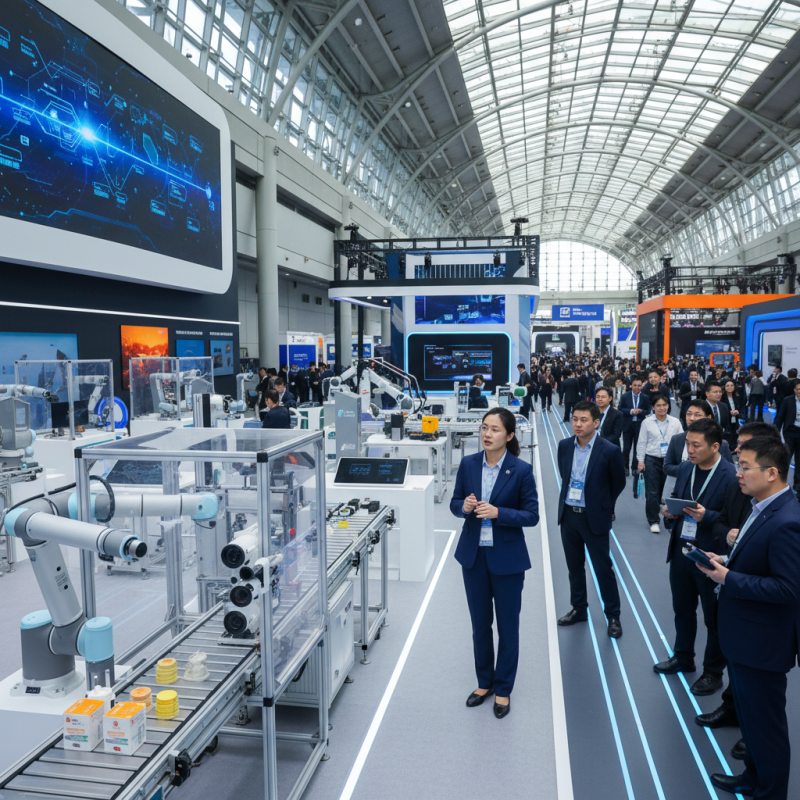
How Industrial Vision Inspection Enhances Quality Control at Trade Fairs
Industrial vision inspection plays a crucial role in enhancing quality control at trade fairs like the Canton Fair. This technology uses advanced cameras and artificial intelligence to monitor products in real time. According to a recent industry report, 70% of manufacturers have adopted some form of vision inspection. This shows a growing trend towards automation and increased accuracy in quality assessments.
The accuracy of industrial vision systems can reduce defects by up to 30%. However, implementing such systems isn't always straightforward. Misalignment of cameras or software integration issues can happen. Some manufacturers may face challenges in processing the vast amount of data generated. It's essential to have trained personnel to manage these systems effectively. Despite the hurdles, the return on investment is clear. Observers at trade fairs benefit from seeing high-quality products verified through this technology.
Trade fairs are competitive environments where product quality matters greatly. A 2022 survey indicated that 85% of attendees consider product quality the top priority. Industrial vision inspection addresses this concern head-on, but it requires careful planning and execution. Companies must remain vigilant and adaptive. Otherwise, they risk falling behind in quality assurance as competitors embrace this technology.
Key Technologies Behind Industrial Vision Systems for Inspection
Industrial vision systems play a pivotal role in enhancing inspection processes. At events like the 2026 Canton Fair, these systems can revolutionize quality control. High-resolution cameras capture detailed images. Advanced algorithms analyze these images swiftly. This automation reduces human error. However, the systems may struggle in low-light conditions. They also require regular calibration to maintain accuracy.
Another key technology is machine learning. This allows systems to learn from data over time. They can identify defects that may be too subtle for the naked eye. However, the initial setup can be complex. Training such systems often requires a large dataset. This is a resource-intensive process. Integrating vision systems with existing workflows is also challenging.
Furthermore, user interface design can affect efficiency. A poorly designed interface can lead to operator mistakes. Balancing functionality and usability is essential. Testing the system in real conditions may reveal unforeseen issues. These problems can disrupt production and require time-consuming fixes. Careful planning and clear communication are crucial for success.
The Impact of AI on Industrial Vision Inspection Efficiency
The impact of AI on industrial vision inspection is profound, especially as events like the 2026 Canton Fair approach. With increasing demands for quality and efficiency, AI technologies are revolutionizing how inspections are conducted. Vision systems equipped with AI can detect defects that the human eye might miss. This leads to faster production cycles and improved product quality.
Tips for implementing AI in your inspection process: Start with small investments. Pilot programs can help evaluate effectiveness. Monitor the data collected by the AI systems closely. Sometimes, algorithms might need adjustments based on real-world results. Don't rely solely on technology; human oversight is still crucial for nuanced decisions.
As more companies adopt these technologies, the learning curve can be steep. Not all systems are foolproof. Issues like misidentification or false positives can arise. Being prepared to tackle these challenges head-on is essential. Establish clear guidelines for managing errors and training staff to adjust to new systems. The right balance between AI and human judgment can lead to truly remarkable improvements in inspection efficiency.
Impact of AI on Industrial Vision Inspection Efficiency at 2026 Canton Fair
Case Studies: Successful Implementation of Vision Inspection at Fairs
Industrial vision inspection is transforming quality control at trade fairs. Case studies illustrate its successful application. For instance, a major electronics fair utilized vision systems. The results showed a 30% reduction in inspection time. This efficiency is crucial in fast-paced environments.
Another study from a textile fair indicated significant improvements. Vision inspection detected fabric defects that manual checks missed. It improved accuracy by 25%. In these settings, human error can lead to expensive mistakes. Vision systems prevent such issues, ensuring high-quality outputs.
However, challenges exist. Implementing these systems requires investment and training. Some exhibitors reported difficulties in integration with existing processes. Continuous improvement is necessary. Feedback loops from users can enhance system performance. Ensuring reliability in diverse environments remains a critical focus.
Future Trends in Industrial Vision Inspection by 2026
Industrial vision inspection continues to evolve rapidly. By 2026, the market is expected to reach over $4 billion, according to industry reports. This growth reflects advances in artificial intelligence and machine learning technologies. These innovations improve accuracy and speed in quality control processes.
Implementing vision inspection systems allows for real-time defect detection. However, challenges remain. For instance, improper lighting can affect image quality, leading to false negatives. Companies must train staff to understand these systems thoroughly. As more manufacturers adopt automation, the demand for skilled technicians will rise. Predictions suggest a 30% increase in industrial positions related to vision systems by 2026.
Data suggests that 70% of businesses see a return on investment within a year. Yet, integration issues can arise. Many firms struggle to adapt existing processes to fit new technologies. Continuous adaptability will be critical for those looking to stay competitive. As we approach 2026, focusing on these trends is essential for success in industrial settings.