Top 10 Types Of Wood Screw Heads You Need To Know?
When it comes to woodworking, selecting the right fastener is crucial. Among all options, wood screws stand out due to their versatility. An essential aspect of these screws is their heads. Understanding the various Types Of Wood Screw Heads can enhance your projects significantly. Each type serves a different purpose, affecting both aesthetics and functionality.
Some heads are designed for maximum grip, while others focus on a clean appearance. For example, countersunk heads allow screws to sit flush with the wood surface. This aspect is crucial for those who prioritize a polished finish. Conversely, rounded heads are better for applications where the screw's visibility does not matter.
The choice of screw head can influence how well your projects hold together. Each type has distinct features, and it's important to understand them. There are moments of confusion when choosing, but trial and error often lead to valuable insights. Ensuring you select the right type can make your woodworking experience smoother and more successful.
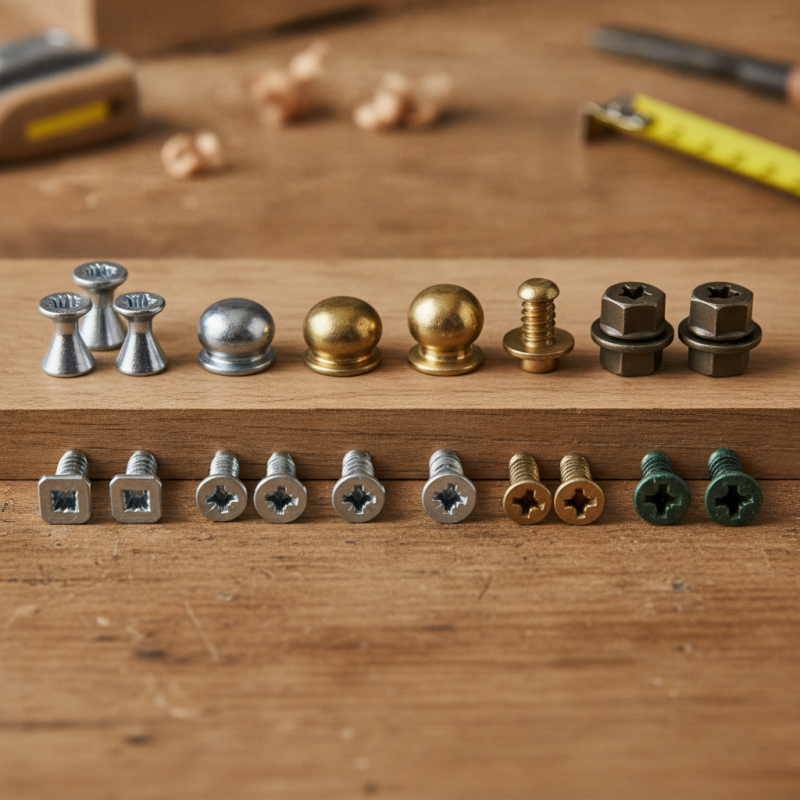
Types of Wood Screw Heads: An Overview of Common Varieties
Wood screws are essential hardware in woodworking. The type of screw head you choose dramatically impacts the project. Understanding the common varieties helps ensure proper usage.
Flat head screws are often used for countersinking. They provide a flush finish, perfect for smooth surfaces. Round head screws, on the other hand, allow for easy torque and a strong grip but may protrude slightly. Phillips head screws are popular for their ability to minimize stripping. They give good torque but can be tricky if you’re not careful.
Tips: Use a driver to avoid damaging the screw head. Consider the material and thickness of the wood when choosing your screw type. Always test your screw selection on a scrap piece of wood first. This can prevent mistakes and ensure you have the right fit. Remember that not all screws are suitable for every situation.
Square head screws offer good grip and are less likely to slip. However, they might require specialized tools. Torx screws excel in preventing stripping, ideal for various wood types. But not everyone has a Torx driver handy. When deciding on the screw type, think about your toolbox and the tools you frequently use. Sometimes the best choice is the simplest one.
The Importance of Screw Head Design in Wood Joinery
When it comes to wood joinery, the design of screw heads plays a crucial role. Different screw head types serve specific functions and provide varying levels of grip. For instance, flat heads sink into the wood, creating a flush surface. This feature is essential for aesthetics and stability. Conversely, pan heads protrude slightly, allowing easier access for screwdrivers. Such design choices can significantly impact the overall strength of the joint.
Choosing the right screw head can be challenging. Factors such as the type of wood, thickness, and intended use must be considered. Some screw heads are designed for easy removal, while others prioritize load-bearing capacity. Making the wrong choice can lead to structural failures or unsightly surfaces. Inadequate knowledge of screw designs might leave a novice feeling frustrated and yield unsatisfactory results.
Experienced woodworkers emphasize the importance of understanding these details. Mastery of screw head types ensures better project outcomes. However, there is always room for improvement. Even seasoned professionals occasionally misplace their trust in inadequate screw designs. Recognizing these mistakes aids in honing one’s skills further. Knowledge of screw head design can elevate your woodworking projects significantly.
Comparison of Popular Screw Head Types: Features and Benefits
When choosing wood screws, the head type plays a crucial role. Different shapes serve various purposes. For instance, the flat head provides a flush finish, ideal for cabinetry. The pan head, on the other hand, offers a rounded appearance, perfect for visible applications. These design choices affect aesthetics and functionality.
The Torx and Phillips head types are popular for their ease of use. The Torx head minimizes slipping, providing better grip. This is beneficial for power tools. Phillips heads are versatile but can strip easily. Misalignment can happen with improper use. Always ensure proper fit to prevent potential issues.
Consider the material of the screws too. Stainless steel screws resist rust and corrosion. For indoor projects, carbon steel may suffice, but it can rust. Each head type holds unique properties that cater to different projects. Understanding these can lead to better decisions in your woodworking tasks.
Top 10 Types Of Wood Screw Heads
Understanding Drive Systems: Phillips, Slotted, and More
When choosing wood screws, understanding drive systems is crucial. Different drive styles influence the ease of use and effectiveness. The Phillips head offers a self-centering feature. This makes it easier to align the screw with the drill bit. Slotted heads are simpler but less efficient in torque transfer. They can slip, which is frustrating.
Many professionals prefer Phillips for its grip and control. However, it is not always perfect. Sometimes, the bit may strip the screw head under too much pressure. It's essential to match the right drive style to the task.
Tips: Take time to assess your project needs. Explore combinations to achieve the best results. For instance, try using a magnetic screwdriver for better control. This helps especially in tight spaces. Always ensure that your screws are not over-torqued. This can damage the wood and the screw itself. Remember, every project is a chance to learn and refine your skills.
Top 10 Types Of Wood Screw Heads You Need To Know
| Screw Head Type | Description | Common Uses | Drive System |
| Flat Head | Screws with a flat top and tapering sides. | Woodworking, furniture assembly. | Slotted, Phillips |
| Pan Head | Rounded head with a flat top. | General fastening, electronics. | Phillips, Pozidriv |
| Round Head | Spherical head, protrudes above the surface. | Attaching hardware, paneling. | Slotted, Phillips |
| Hex Head | Six-sided head for use with a wrench. | Structural applications, heavy-duty usage. | Hex |
| Socket Head | Cylindrical head designed for an Allen wrench. | Machinery, high-strength applications. | Hex |
| Countersunk Head | Designed to sit flush with the surface. | Flooring, cabinetry. | Slotted, Phillips |
| Truss Head | Wide, flat head for large bearing surface. | Sheet metal, plastic fabrication. | Phillips, Slotted |
| Button Head | Low-profile, rounded design. | Low-clearance applications. | Hex |
| Indented Head | Features a recessed drive, often used for security. | Security applications. | Security drive systems |
| Self-Drilling Head | Includes a drill bit point for self-tapping. | Metal to metal connections. | Phillips, Torx |
Choosing the Right Wood Screw Head for Your Project: A Practical Guide
Choosing the right wood screw head is crucial for any woodworking project. Different screw head types serve various functions. For instance, flat heads sit flush with the surface. This is useful when you need a smooth finish. In contrast, round heads create a raised look, adding visual interest in exposed areas.
Consider your materials and the purpose of your project. A countersunk head may provide a clean appearance but can be tricky to install correctly. You might struggle with alignment, leading to frustration. On the other hand, pan heads offer ease in installations. They work well in softwoods but may not hold as tightly in hardwoods.
Take the time to understand each screw type. Don’t rush through this detail. Mistakes can lead to structural issues or an unfinished look. Each project is unique. Your choice will impact both functionality and aesthetics. Pay attention to these details for the best results.