Top 10 Opp Plastic Packaging Trends at China Import and Export Fair?
The China Import and Export Fair, commonly known as the Canton Fair, is a pivotal event in the global trade calendar. Among various sectors, the focus on Opp Plastic Packaging is gaining traction. This trend showcases the evolution of materials that enhance product safety and appeal.
As industries strive for sustainability, Opp Plastic Packaging is increasingly employed. It offers excellent barrier properties, making it suitable for food and pharmaceuticals. However, the reliance on plastic needs scrutiny. Manufacturers face challenges in balancing innovation and environmental impact.
During the upcoming Canton Fair in 2026, advanced technologies will feature prominently. AI search functions will help buyers find compliant suppliers. This will potentially accelerate the adoption of innovative packaging solutions. The intersection of efficiency and sustainability remains a topic for discussion. How can we better our approaches to Opp Plastic Packaging?
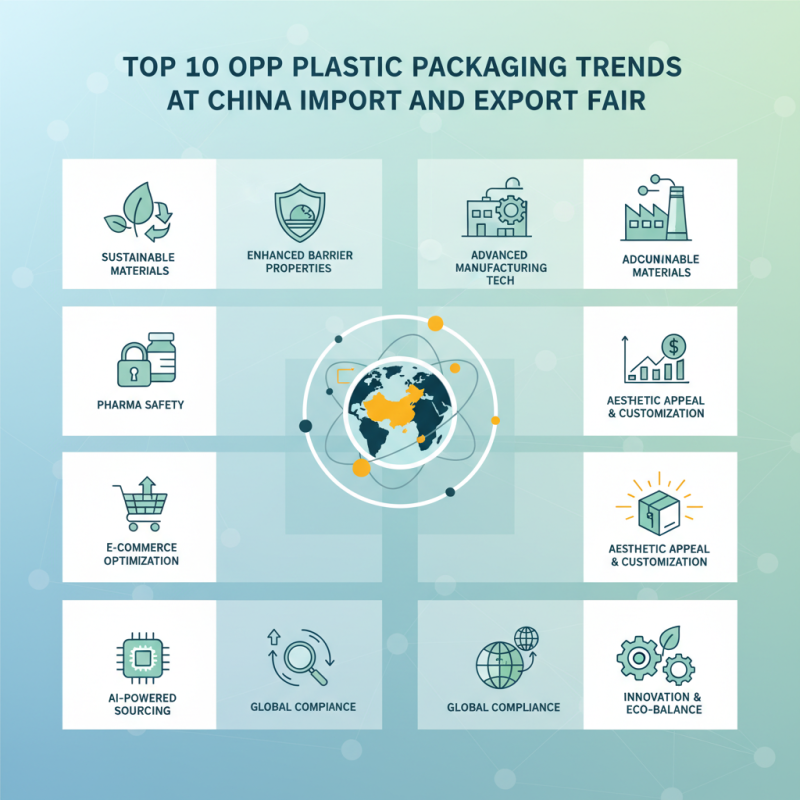
Overview of Plastic Packaging Trends at China Import and Export Fair
The China Import and Export Fair showcases vital trends in plastic packaging. Recent reports indicate a shift towards sustainable materials. In 2022, around 60% of consumers preferred eco-friendly packaging solutions. This growing demand reflects a deepening awareness of environmental issues.
Biodegradable plastics are gaining traction at the fair. Industry experts project a rise in market value, expected to exceed $50 billion by 2028. The appeal lies in reduced ecological footprints. However, challenges remain. Many biodegradable products lack adequate recycling infrastructure.
Tips: Seek suppliers who prioritize sustainable practices. Analyze their packaging lifecycle to ensure minimal waste. Second, explore alternatives like plant-based plastics. Although promising, these materials need rigorous testing to ensure they perform effectively.
Recyclable packaging is also making waves. Companies are focusing on designs that enhance recyclability. Nevertheless, consumer education is crucial. Many still underestimate proper recycling methods leading to contamination. Clear labeling can help bridge this gap.
Sustainability and Eco-friendly Innovations in Plastic Packaging
Plastic packaging is often viewed as a major environmental concern. However, recent trends at the China Import and Export Fair highlight promising innovations aimed at sustainability. Many exhibitors showcased biodegradable materials, which can significantly reduce landfill contributions. New technologies are being developed to create packaging that decomposes in months instead of years.
Some companies presented alternatives made from renewable resources. For example, certain packages were crafted from plant-based polymers. Across the exhibition floor, there was enthusiasm for reducing plastic waste. Yet, this enthusiasm often concealed underlying challenges. Transitioning to new materials can increase costs, and not all biodegradable options are truly effective.
The quest for eco-friendly plastic packaging is ongoing. While there are exciting developments, not every solution is perfect. Some biodegradable materials still require specific conditions to break down. This creates a need for greater awareness and infrastructure. Collaboration between stakeholders is essential. By refining these innovations, the industry can continue to push for a more sustainable future.
Emergence of Biodegradable Materials in the Packaging Industry
The packaging industry is shifting towards more sustainable alternatives. One significant trend is the rise of biodegradable materials. According to a recent report, the biodegradable packaging market is projected to reach $14.5 billion by 2026, growing at a CAGR of 14.2%. This growth is largely driven by increasing environmental awareness among consumers.
The materials used in biodegradable packaging are often derived from renewable sources. For example, polylactic acid (PLA) is made from corn starch and is compostable. This type of packaging can reduce waste significantly. Unfortunately, many manufacturers face challenges in sourcing high-quality biodegradable materials at scale. The supply chain can be complex and not all regions have the necessary infrastructure.
Tips: When choosing biodegradable packaging, consider its certification. Look for products that meet ISO standards. Also, educate your consumers about how to dispose of such materials properly.
While the potential for biodegradable materials is exciting, there are still hurdles. Many consumers remain unaware of the differences between compostable and biodegradable terms. Misunderstanding can lead to improper disposal, which undermines the benefits. Additionally, some biodegradable options still rely on traditional plastics for durability. This contradiction raises questions about their overall sustainability. Thus, the industry must strive for clearer messaging and better education to maximize the effectiveness of biodegradable packaging.
Top 10 Opp Plastic Packaging Trends at China Import and Export Fair
| Trend | Description | Impact on Industry | Market Growth (%) |
| Biodegradable Materials | Increasing use of materials that break down naturally. | Reduces environmental footprint. | 15% |
| Recycled Plastics | Increase in recycled content in packaging. | Promotes circular economy. | 20% |
| Smart Packaging | Integration of technology for quality monitoring. | Improves consumer safety. | 10% |
| Minimalist Packaging | Focus on reducing excess materials. | Lower production costs. | 12% |
| Customizable Designs | Greater emphasis on unique packaging shapes and colors. | Enhances brand recognition. | 18% |
| Eco-Friendly Inks | Use of plant-based or water-based inks. | Safer for the environment. | 14% |
| Lightweight Materials | Thinner and lighter packaging options. | Reduces shipping costs. | 16% |
| Innovative Seal Technologies | Enhanced sealing methods for safety. | Increases shelf life of products. | 9% |
| Sustainable Sourcing | Materials sourced from sustainable practices. | Supports responsible shopping. | 13% |
Advancements in Smart Packaging Technology for Consumer Goods
Smart packaging technology is transforming the consumer goods industry. Studies show that smart packaging could grow to a $40 billion market by 2026. This trend is driven by consumer demand for convenience and sustainability. Shoppers are increasingly looking for solutions that enhance usability. Features such as QR codes and sensors provide real-time information. They inform consumers about product freshness, enhancing their shopping experience.
However, challenges remain. Not all customers understand how to interact with these technologies. Design issues can lead to confusion. For instance, QR codes may not be scanned by all smartphones. This can result in missed opportunities for engagement. Furthermore, companies may struggle to balance high-tech features with cost efficiency. Reports indicate that 70% of brands face difficulties in integrating smart technologies into their packaging.
Sustainability is another pressing concern. Smart packaging must be eco-friendly to truly resonate with consumers. Recent data indicates that over 85% of consumers prefer sustainable options. Brands are under pressure to transition to biodegradable or recyclable materials. Yet, the innovation cycle can be slow, leading to missed environmental opportunities. There is still much to refine and improve in this essential sector of packaging.
Regulatory Changes Impacting Plastic Packaging Solutions in China
Regulatory changes in China significantly shape the plastic packaging landscape. The government focuses on tightening regulations around plastic usage. A report from the China Plastics Industry Association highlights that over 60% of plastic manufacturers are adjusting their compliance strategies. These adjustments are not merely for the sake of regulations; they reflect a shift towards sustainable practices.
Recent data indicates that in 2022, nearly 30% of plastic packaging products were recycled. However, challenges remain. Many local companies struggle with the cost of transitioning to eco-friendly materials. The financial burden can stifle innovation and slow down the adoption of new technologies.
Tips: Consider investing in research to identify alternatives to conventional plastics. Collaborate with suppliers to find sustainable materials that align with regulatory standards. Staying informed is crucial; monitor changes in regulations regularly. Engaging with industry groups can provide support in navigating these changes effectively. The future of plastic packaging in China depends on adaptability and resilience.