Top Multi Parameter Water Quality Analyzers at Canton Fair 2026?
As the 139th Canton Fair approaches in April 2026, the spotlight shines on innovative technologies, including the multi parameter water quality analyzer. This vital instrument plays a crucial role in monitoring environmental health. Dr. Emily Chen, an expert in environmental technology, states, "Water quality analyzers are essential for sustainable development." Her insights underscore the importance of accurate measurements in water quality management.
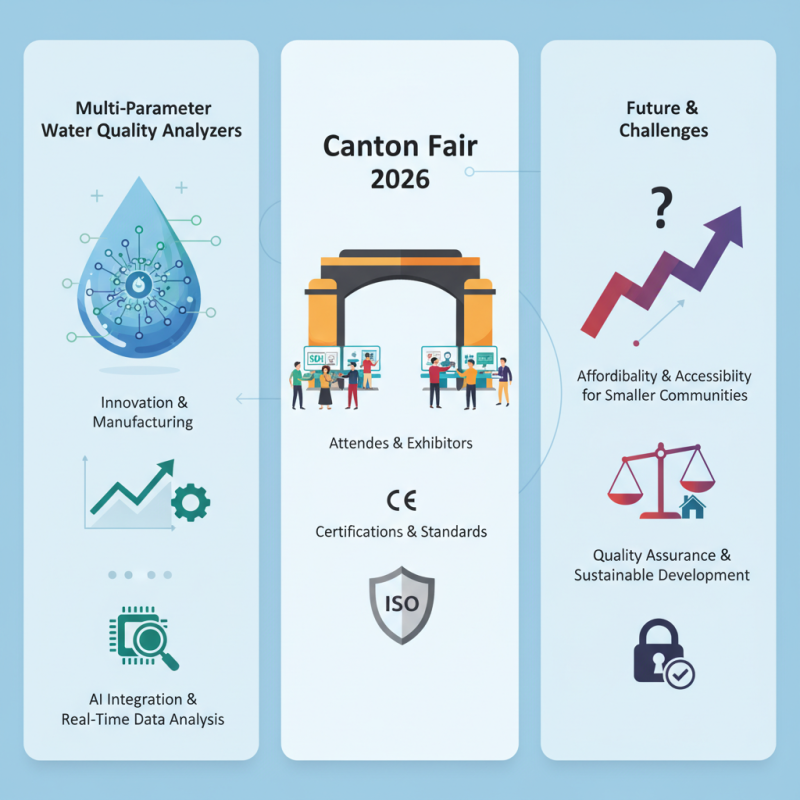
The fair emphasizes advanced manufacturing and smart solutions. Attendees will witness cutting-edge designs of multi parameter water quality analyzers. These devices now feature AI integration for real-time data analysis. Exhibitors will demonstrate how these advancements can ensure cleaner water supplies. However, challenges persist in affordability and accessibility for smaller communities.
The incorporation of AI-driven technology at the Canton Fair enhances efficiency. Buyers can easily find suppliers with the right certifications, such as ISO and CE. Yet, companies must ensure their products meet these standards consistently. Overall, the future of multi parameter water quality analyzers looks promising, but vigilance in quality assurance is necessary.
Top Features of Multi Parameter Water Quality Analyzers
Multi-parameter water quality analyzers are vital for monitoring and maintaining water standards. These devices measure various parameters like pH, turbidity, and dissolved oxygen. At festivals like Canton Fair 2026, visitors can explore many innovative models. These tools provide real-time data, ensuring immediate response to water quality issues.
One key feature of these analyzers is their portability. Many devices are lightweight and battery-operated. This makes field testing much easier and more convenient. Some models also offer wireless connectivity, allowing data to be sent directly to a smartphone or computer. However, while technology progresses, user training remains crucial. Users must understand how to interpret the data accurately, which can be challenging.
Another important aspect is the calibration process. Accurate readings depend on proper calibration, which can be overlooked. Some users may struggle with maintaining calibration, potentially leading to incorrect data. Additionally, the interface of these analyzers can be complex. Users might face a learning curve, affecting their ability to utilize the full range of features effectively.
Key Manufacturers Showcased at the Canton Fair 2026
The Canton Fair 2026 is set to feature an impressive array of multi-parameter water quality analyzers. These devices are crucial for monitoring water quality in various environments, from industrial to municipal uses. Key manufacturers will showcase their latest innovations, reflecting the industry's rapid technological advancements. According to recent reports, the global water quality testing market is expected to reach $4.5 billion by 2027. This growth is driven by increasing industrialization and environmental awareness.
Some key parameters analyzed by these devices include pH, turbidity, and dissolved oxygen levels. Accurate readings of these factors are essential for ensuring safe drinking water. Notably, 45% of water quality issues in urban areas stem from aging infrastructure. Manufacturers are focusing on developing user-friendly interfaces. This helps minimize human error in readings and improves overall data reliability.
The fair will present opportunities for manufacturers to engage with industry experts. However, challenges persist in maintaining product quality amid rapid production demands. Many manufacturers struggle with balancing innovation and cost. This leads to uneven quality across the market. As the demand for real-time data increases, the pressure on producers to deliver reliable products grows.
Comparative Analysis of Different Water Quality Analyzers
The analysis of water quality is crucial for both environmental safety and public health. Multi-parameter water quality analyzers are important tools, especially showcased at expos like the Canton Fair. Various models feature different capabilities and precision levels. Some devices can measure pH, turbidity, conductivity, and temperature, while others can detect specific contaminants. This variety creates a dilemma for buyers.
When examining different analyzers, accuracy and user-friendliness are key factors. Some analyzers are highly sensitive but require extensive calibration. Others are easier to use but may sacrifice precision. How do users balance these aspects? The performance also varies across conditions, such as temperature and pressure. Users report fluctuating results that prompt reflection on their methods.
Another consideration is the cost vs functionality. Some advanced devices come with a hefty price tag. Users may find themselves questioning if the extra features are truly necessary. In the end, individual needs and expectations play a significant role in making the right choice. Each analyzer presents unique advantages and limitations that require careful consideration before purchase.
Innovative Technologies in Water Quality Monitoring Devices
Innovative technologies in water quality monitoring have come a long way. At the Canton Fair 2026, new devices will showcase these advancements. Smart sensors and real-time data monitoring are key highlights. They offer accurate readings of various parameters like pH, turbidity, and dissolved oxygen. Such features help professionals make informed decisions regarding water quality management.
Tips: Always consider the integration of IoT in these devices. It enhances data accessibility. Mobile applications can provide instant updates. This ensures your team stays informed, even on the go.
The design of these analyzers is crucial. Compact models are ideal for fieldwork. They are often easy to transport. However, usability can be a challenge. Some devices have complex interfaces that require training. It’s essential to focus on user-friendly designs. Making these tools accessible allows more individuals to participate in monitoring efforts.
Consider compatibility with existing systems. Some devices may not align well with older infrastructure. This can create gaps in data monitoring. Always assess the long-term viability of new technologies. It’s necessary to balance innovation with practical applications to achieve optimal results.
Water Quality Parameters Comparison
Future Trends in Water Quality Analysis Equipment at Trade Fairs
The water quality analysis market is evolving rapidly. Recent reports indicate a projected growth rate of 7.5% annually through 2030. Trade fairs like the Canton Fair showcase cutting-edge technology in this field. The demand for multi-parameter analyzers is rising. These devices can measure various water quality indicators simultaneously. This feature boosts efficiency and reduces analysis time significantly.
The future trends seem promising. Analysts expect advancements in sensor technology and data processing. AI and machine learning will play crucial roles in analyzing complex datasets. Companies are developing portable analyzers to meet field requirements. However, challenges remain.
Calibration accuracy and maintenance are ongoing issues. Many users report difficulties in real-time monitoring under fluctuating environmental conditions. As the industry pushes forward, these reflections are essential for improvement.
Trade fairs act as a catalyst for innovation. They provide a platform for networking and collaboration among professionals. Potential buyers get a firsthand experience of the latest models. However, some attendees leave with unmet expectations. A lack of comprehensive demonstrations can be frustrating. This highlights the need for better engagement in future exhibitions.