What Is PET Clear Sheet and How Is It Used?
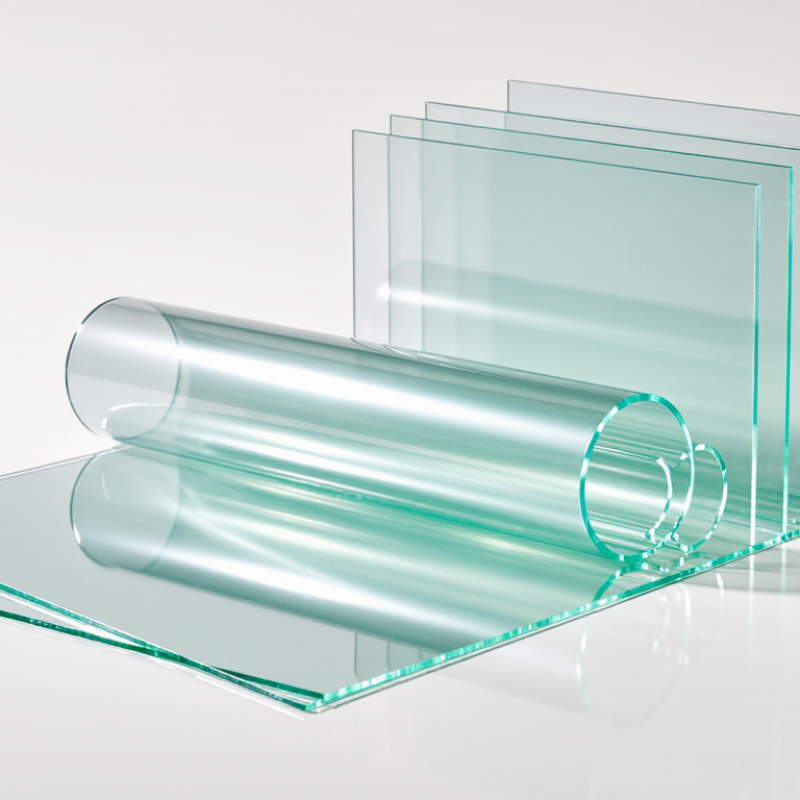
Pet Clear Sheet is a transparent plastic material made from polyethylene terephthalate, commonly called PET. It combines clean appearance, useful stiffness, and dependable dimensional stability. These qualities make it popular in packaging, retail displays, protective covers, and printed products. A sheet may look simple, but its performance depends on thickness, surface treatment, and manufacturing quality.
In practical use, converters cut, fold, die-cut, print, or thermoform Pet Clear Sheet for specific products. Thin grades can protect labels and documents without adding much weight. Thicker grades can create display boxes, dividers, and rigid covers. Clear packaging lets customers inspect the product directly. That visual access often improves shelf presentation. It also helps workers identify contents quickly.
However, PET is not suitable for every environment. Excessive heat can affect its shape, while scratches may reduce visual clarity. Food-contact applications require appropriate grades and documented compliance from reputable suppliers. Processing teams should check technical data, including thickness tolerance, forming temperature, haze, and impact performance. Small differences can matter.
It is easy to overstate PET’s sustainability. Some PET products can enter recycling streams, but collection systems and contamination vary widely. Responsible buyers should confirm local recycling guidance and material specifications. In my experience, the best results come from testing a sample before placing a large order. Pet Clear Sheet is versatile, but careful selection remains essential. Performance should be measured, not assumed.
PET Clear Sheet: Definition, Composition, and PET Resin Code #1
PET clear sheet is a transparent, flat thermoplastic sheet made from polyethylene terephthalate, or PET. Its polymer forms when ethylene glycol reacts with terephthalic acid. During extrusion, molten PET resin becomes a continuous sheet. Cooling then controls its thickness, clarity, and surface finish. It feels smooth and firm. It also resists moisture and many everyday chemicals.
The PET resin identification code is #1. ASTM D7611 assigns this code to PET, helping sorting systems identify the resin family. However, #1 does not prove recycled content, food-contact approval, or local recyclability. That distinction matters. Thermoformers use PET clear sheet for trays, display covers, protective guards, folded packaging, and printed panels. Engineers should check haze, tensile strength, heat resistance, and thickness tolerance. Small specification errors can cause cracking or distortion.
Packaging drives much PET demand. The OECD Global Plastics Outlook reports 353 million tonnes of plastic waste in 2019, with only 9% recycled. This figure covers many polymers, not PET alone. Still, it reveals a practical weakness: clear does not mean circular. PET may enter established recycling streams, but collection, contamination, coatings, and sheet thickness affect recovery. A responsible specification should list recycled content separately. Code #1 is a resin identifier, not a sustainability certificate.
Key Properties: 1.38 g/cm³ Density, High Clarity, and 50–75 MPa Strength
PET clear sheet is a transparent thermoplastic made from polyethylene terephthalate. Its typical density is about 1.38 g/cm³, according to PET technical data compiled in industry processing guides. This compact structure gives the sheet useful stiffness without excessive weight. Its high clarity also supports product visibility in trays, display panels, protective covers, and packaging components.
Typical tensile strength ranges from 50 to 75 MPa. ISO 527 testing data show that results vary with sheet orientation, thickness, and forming temperature. That range is practical, not absolute. A thinner sheet may flex more easily, while biaxial orientation can improve dimensional stability. ASTM D1003 methods are commonly used to measure haze and light transmission. Clear PET usually performs well, but surface scratches can quickly reduce its visual quality.
Market analysis from Smithers’ 2024 PET packaging outlook identifies transparent packaging and thermoformed applications as important demand areas. In production, converters often heat PET sheet until it softens, then form it over a tool. Cooling speed matters. Too much heat can create distortion or whitening. Moisture control matters too, because poorly dried material may lose clarity during processing. These details are easy to underestimate. A specification should always be verified with the actual grade, thickness, and test conditions.
How PET Sheets Are Manufactured: Extrusion, Cooling, and Thickness Control
PET clear sheet begins with carefully dried PET resin. Moisture is a serious problem. It can cause bubbles, brittleness, and reduced clarity during melting. The resin enters an extruder, where heated zones gradually raise its temperature to roughly 260–280°C. A rotating screw then mixes and pushes the melt through a flat die. The die gap strongly influences the initial sheet profile. Small changes matter.
Cooling follows immediately. The hot sheet passes across polished chill rolls, which freeze the surface and support transparency. Roll temperature, pressure, and line speed must remain balanced. Faster speed can reduce thickness, but it may also create uneven edges. Inline gauges use infrared or X-ray measurement to check thickness continuously. Operators adjust the die lip or extrusion speed when readings drift. PET sheet is commonly produced from about 0.2 to several millimeters, depending on packaging, printing, or forming needs.
PlasticsEurope’s Plastics—The Fast Facts 2023 reported global plastics production of 400.3 million tonnes in 2022, showing the scale behind polymer processing. NAPCOR’s 2023 recycling report recorded about 1.9 billion pounds of postconsumer PET bottles collected in the United States during 2022. Some recycled PET can enter sheet production after cleaning and filtration. However, recycled content may affect color, viscosity, and thickness stability. Clear does not always mean perfectly colorless. That assumption deserves more testing.
Main Uses in Packaging, Printing, Electronics, and Protective Glazing
PET clear sheet is a transparent, lightweight material made from polyethylene terephthalate. It offers good stiffness, chemical resistance, and dimensional stability. Manufacturers can produce it in thin rolls or rigid panels. Surface quality matters. Tiny scratches can affect visibility and print accuracy.
Packaging is its largest practical field. PET sheet forms blister packs, folded cartons, trays, lids, and label windows. The OECD reports that packaging represents about 40% of global plastic use. Smithers’ 2024 market assessment also places worldwide flexible packaging demand above US$300 billion. These figures explain PET’s strong position, although recycling performance depends on collection and sorting systems. Clear sheet also supports high-resolution printing for product graphics, instructions, and security markings. In practice, ink adhesion must be tested after corona treatment or coating.
Electronics manufacturers use PET film and sheet as insulation, display layers, membrane-switch components, and protective liners. Its consistent thickness helps control electrical and optical performance. Protective glazing uses thicker PET-based panels for machine guards, interior partitions, document covers, and temporary window protection. It is lighter than glass and resists shattering, but it can scratch more easily. That weakness is easy to underestimate. The International Organization for Standardization’s test methods for plastics emphasize measuring haze, light transmission, impact behavior, and thickness before installation. Recycled content may reduce environmental impact, yet it can sometimes lower clarity or increase color variation. Careful specification remains necessary.