How to Choose the Best Industrial Cardboard Tubes for Your Needs
When selecting industrial cardboard tubes, there are several factors to consider. These tubes serve various purposes, from packaging to construction. Their versatility makes them essential in many industries. However, choosing the right one can be challenging.
Choosing the best industrial cardboard tubes requires understanding your specific needs. Consider the diameter, length, and thickness. Different applications demand different specifications. Yet, many overlook these details. This can lead to inefficiencies or increased costs.
Beyond dimensions, the tube's strength and material quality are crucial. Some tubes offer better durability for heavy products. Others may be lightweight but less sturdy. Reflecting on past choices can guide improvements. An informed decision will enhance productivity and reduce waste.
Understanding the Different Types of Industrial Cardboard Tubes
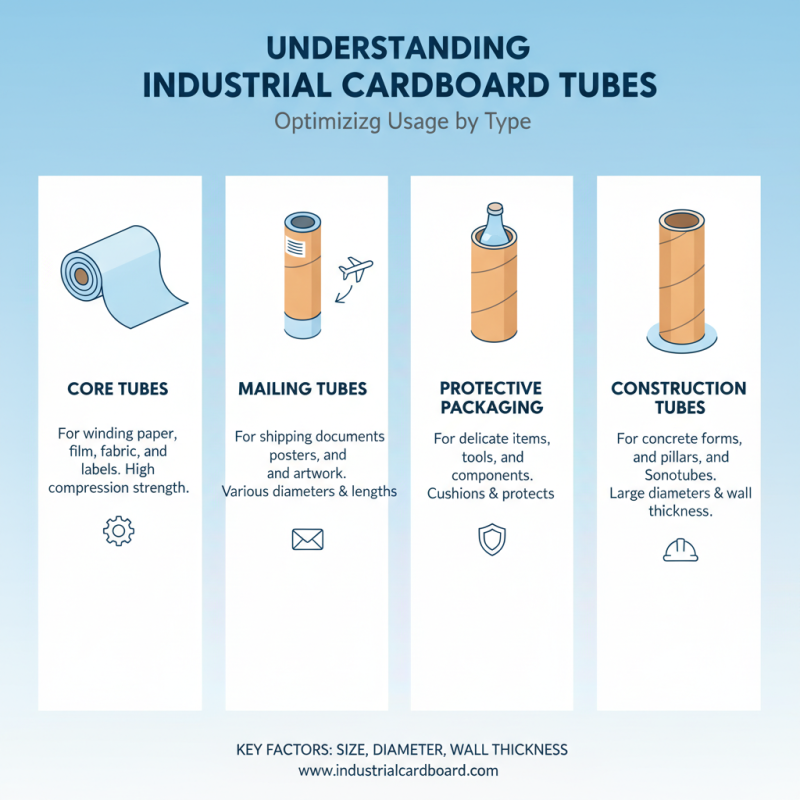
Choosing the right industrial cardboard tube requires understanding the different types available. Cardboard tubes come in various sizes, diameters, and wall thicknesses. Each type serves specific purposes, and knowing these can optimize usage.
Heavy-duty tubes are ideal for shipping and storage. These tubes have reinforced walls, enhancing their durability. They can withstand significant weight and pressure but may be overkill for lighter applications. On the other hand, standard tubes offer a cost-effective solution for packaging lightweight products. However, their fragility can lead to damage during transport.
Specialty tubes cater to unique demands. Some are designed to resist moisture, while others are specifically made for food products. Understanding the environmental conditions where the tubes will be used is crucial. While these tubes offer great benefits, applying them incorrectly may lead to unforeseen challenges. Choosing the right type is essential, yet it may require some trial and error.
Key Factors to Consider for Your Specific Needs
When selecting industrial cardboard tubes, several key factors play a significant role. Start with tube dimensions. The diameter and length must fit your specific application. A tube too wide or too narrow could lead to complications in handling or storage. Thin walls might not provide the durability needed for heavy materials. Consider the weight and type of items you’ll store. This plays a crucial role in choosing the right material grade for your tubes.
Next, think about your environment. Will the tubes be exposed to moisture or chemicals? Choosing a water-resistant or chemically treated option may be vital. A poor choice here could lead to product deterioration and increased costs down the line. Also, examine how the tubes will be used. If they require printing or labeling, ensure the cardboard surface supports these needs. A rough texture can affect print quality. Reflect on past experiences; a wrong choice can lead to operational disruptions. Carefully assessing these factors ensures that your selection aligns with your specific requirements. Finding the right fit is not just about the function, but also about reliability and efficiency in your workflow.
Evaluating the Strength and Durability of Cardboard Tubes
When evaluating the strength and durability of cardboard tubes, consider several key factors. The thickness of the tube walls plays a crucial role. Thicker walls generally provide greater strength, making them suitable for heavier loads. Look for tubes that offer resistance to crushing and bending. This ensures they hold up during storage and transportation.
Another important aspect is the material quality. Not all cardboard is created equal. Higher quality cardboard has better tensile strength and durability. It may also be more resistant to moisture and wear. This is vital if the tubes will be exposed to varying environmental conditions.
Testing the tubes under real-world conditions can also provide insights. Conducting simple strength tests can help determine how much weight a tube can handle. Observing any deformation or failure during these tests is a valuable learning moment. Reflecting on these experiences can lead you to make more informed choices for your specific needs.
Assessing Size and Dimensions for Optimal Usage
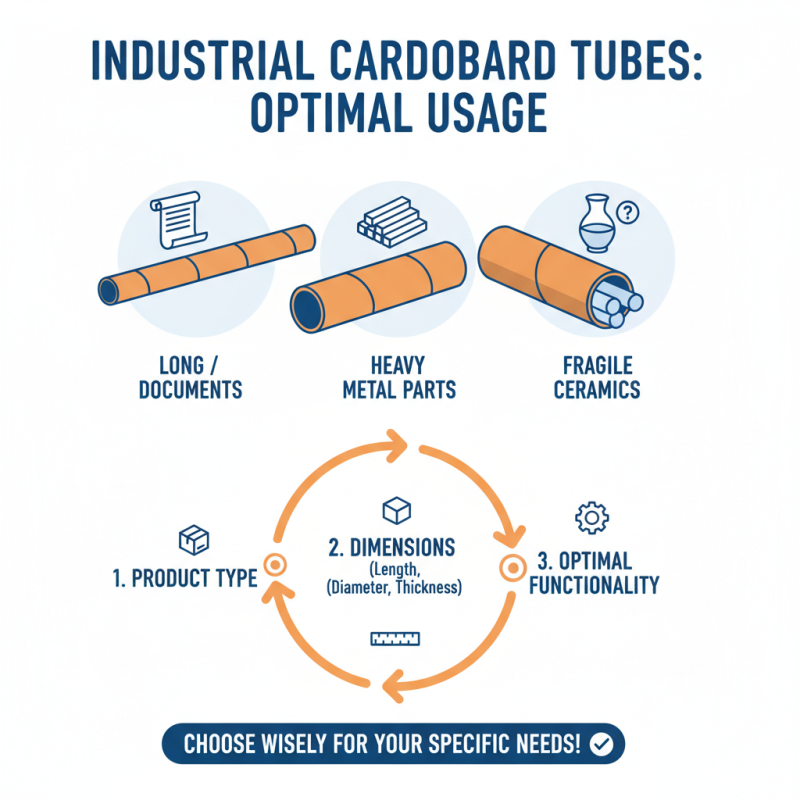
Choosing the right size and dimensions for industrial cardboard tubes is crucial. These tubes must fit your specific needs to optimize functionality. Consider the products you plan to package or ship. Are they long, heavy, or fragile? The dimensions of the tube should match these characteristics.
For example, a tube that is too small may not securely hold your item. Conversely, a tube that is excessively large can lead to damage during storage and transport. It's also essential to evaluate the wall thickness of the tube, as this affects durability. Thicker walls may offer better protection but also increase weight and cost.
Reflect on your storage space. A large number of oversized tubes may not fit well. It's easy to overlook the importance of scale when making your choice. Taking precise measurements can prevent future issues. An incorrectly sized tube can disrupt efficiency. Each small detail matters in ensuring your materials are well-protected and accessible.
Sourcing Reliable Suppliers for Industrial Cardboard Tubes
When sourcing reliable suppliers for industrial cardboard tubes, understanding your specific needs is vital. According to a report by Smithers Pira, the global demand for cardboard packaging is projected to grow by 4.3% annually. This statistic highlights the importance of finding trustworthy providers who can keep up with the rising market demand. Selecting the right supplier not only involves cost considerations but also quality assurance.
Thoroughly vetting potential suppliers is crucial in achieving long-term satisfaction. Request samples to assess the durability and quality of their cardboard tubes. A report from The Freedonia Group notes that 60% of businesses prioritize sustainability. Finding suppliers who practice eco-friendly production can provide added value to your operations. Regular production audits and clear communication can help maintain quality and compliance with industry standards.
Consider logistics as a fundamental factor when choosing a supplier. Lead times should align with your production schedules to avoid downtimes. Some suppliers may offer competitive pricing but fall short on reliability. Balancing cost with dependability is key in making an informed decision. Evaluating potential suppliers through customer reviews and performance metrics is recommended. This diligence is important in ensuring that your needs are met effectively.