China Best Food-Grade Pulp at 2026 Canton Fair Insights?
The upcoming 2026 Canton Fair promises to be a pivotal event for the food industry, particularly focusing on Food-Grade Pulp. Industry expert Dr. Emily Wu, a renowned figure in sustainable packaging, states, "The future of Food-Grade Pulp lies in its innovative applications." This insight highlights the significance of this material in today's market.
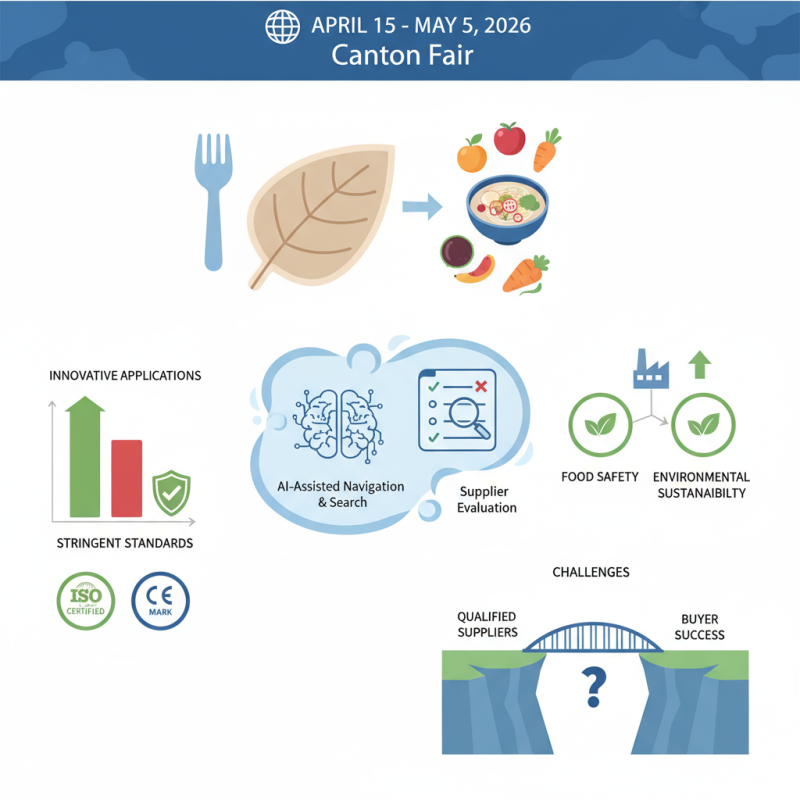
As the fair unfolds from April 15 to May 5, it will emphasize the vital role of advanced materials like Food-Grade Pulp. Attendees will see how this product is revolutionizing food safety and environmental sustainability. The introduction of AI-assisted navigation and searches will streamline the experience for buyers seeking qualified suppliers.
However, challenges remain. Some suppliers may not meet the stringent standards that buyers expect. This disparity can lead to missed opportunities and unmet requirements. It’s essential for buyers to carefully evaluate credentials such as ISO and CE certifications. Navigating such complexities at the fair will be crucial for success.
China's Food-Grade Pulp Industry Overview and Significance
China's food-grade pulp industry plays a critical role in the global market. The demand for food-grade pulp products is expected to grow by over 5% annually. This trend supports various food applications, such as packaging and additives. The industry's focus on quality ensures that products meet stringent safety standards. However, challenges remain in maintaining consistency and sustainability in production.
Many manufacturers are exploring eco-friendly sourcing methods. This is essential, as awareness of environmental impacts increases. In 2022, over 40% of food-grade pulp was produced using sustainable practices. Yet, many producers still struggle to adopt these methods fully. The need for improved technology and infrastructure is evident. Investments in research and development can pave the way for better practices.
Market reports suggest that Asia-Pacific will dominate food-grade pulp consumption by 2026. China is positioned as a key player in this growth. Despite facing competition, the potential is significant. Focusing on quality assurance is crucial. The industry must reflect on its challenges to ensure sustainable progress. Each step taken towards eco-friendliness can boost reputation and market appeal.
China's Food-Grade Pulp Industry Overview - 2026 Insights
Key Players and Manufacturers in China's Food-Grade Pulp Market
The food-grade pulp market in China is evolving rapidly. According to recent industry reports, it is projected to grow at a CAGR of over 5% through 2026. This growth is fueled by increasing health awareness and the demand for sustainable packaging solutions. Key players are focusing on producing high-quality, safe materials for food products.
Manufacturers in China are investing in advanced technologies to improve the safety and quality of food-grade pulp. However, challenges remain in maintaining consistent production standards. Quality control processes often need refinement to ensure compliance with international safety regulations. This inconsistency can impact consumer trust.
Additionally, the competitive landscape is shifting. New entrants are emerging, putting pressure on established players. Collaboration among industry stakeholders is crucial to navigate these changes. The urgency for innovation in sourcing and processing methods is evident, as it may determine future market leaders. Companies must continuously adapt to meet consumer expectations and regulatory demands.
Innovative Technologies in Food-Grade Pulp Production
The food-grade pulp industry is evolving significantly. Innovative technologies are reshaping production processes. According to a recent industry report, the global food-grade pulp market is expected to reach $18 billion by 2026. This growth highlights the rising demand for natural, sustainable, and safe food packaging solutions.
Advanced pulping techniques have emerged. For instance, enzymatic treatments are used to enhance fiber quality. This process not only improves the pulp's properties but also reduces environmental impact. Additionally, research indicates that utilizing waste materials can lead to cost-effective production. However, there can be challenges with consistency in quality. Maintaining standards while integrating these technologies is crucial.
The implementation of smart manufacturing is also notable. Automated systems increase efficiency and minimize waste. Reports show that companies adopting these systems have seen a 20% reduction in production costs. But, this transition requires investment and training. Not all players in the market are ready for this change. The balance between innovation and practical application remains a focal point for the industry.
Sustainability Practices in China's Food-Grade Pulp Sector
Sustainability is a growing concern in the food-grade pulp sector in China. Many manufacturers are adopting eco-friendly practices. This shift not only meets consumer demand but also adheres to environmental regulations. The emphasis is on reducing waste and using renewable resources. Emerging technologies are helping optimize production processes, making them more efficient.
Tips for producers: Invest in sustainable technologies. This can enhance your brand image. Consider sourcing raw materials locally. It can lower transportation emissions. Furthermore, engage with stakeholders about your sustainable practices. Transparency builds trust.
Despite these advancements, challenges remain. Many facilities still rely on outdated practices. The transition to greener methods can be costly and complex. Smaller producers may struggle with compliance and certification. They need support to ensure they can compete. Collaboration across the industry is essential for progress.
Trends and Expectations for Food-Grade Pulp at the 2026 Canton Fair
As the 2026 Canton Fair approaches, trends in food-grade pulp are evolving. Industry reports indicate a rising demand for sustainable and natural materials. The global food-grade pulp market is projected to reach $2 billion by 2026, with a CAGR of 6%.
Participants will likely focus on innovations in production methods. More manufacturers are adopting eco-friendly processes. This shift responds to consumer preferences for sustainability. However, many companies still grapple with balancing cost and quality. Studies show 35% of producers struggle to meet eco-standards while maintaining profitability.
Expectations for the Canton Fair 2026 spotlight advancements in food-grade pulp applications. Notably, the demand for biodegradable packaging is surging. Experts estimate this segment will grow by 8% annually. Yet, the challenge remains. Many suppliers lack adequate resources for research and development. This gap can hinder the industry's overall progress and impact competitive positioning.