
2026 Top Carton Tubes Manufacturers for Global Buyers?
Choosing reliable carton tubes manufacturers in 2026 requires more than comparing glossy catalogs or low unit prices. Global buyers need suppliers that can deliver consistent dimensions, stable materials, and dependable production schedules. A tube that looks acceptable in a sample may still split during winding, soften in humid storage, or arrive with uneven edges.
This guide examines leading carton tubes manufacturers through practical buying criteria. These include paperboard grade, wall thickness, inner diameter accuracy, compression strength, moisture resistance, printing quality, and packaging protection. It also considers factory experience, quality-control procedures, export capability, and communication standards. Sample approval matters. So does a clear record of inspection and corrective action.
No manufacturer is perfect. Market information can change quickly, and online claims may lack independent verification. Buyers should confirm certifications, production capacity, lead times, and test reports directly with each supplier. Small details often reveal operational maturity, such as labeled pallets, clean winding lines, and consistent tube lengths across one shipment.
The companies discussed here are not ranked by price alone. Their suitability depends on your product, destination, order volume, and required performance. A cosmetics brand may prioritize premium printing, while an industrial buyer may need stronger crush resistance and tighter tolerances. Careful comparison reduces costly surprises and supports a more reliable global sourcing decision.
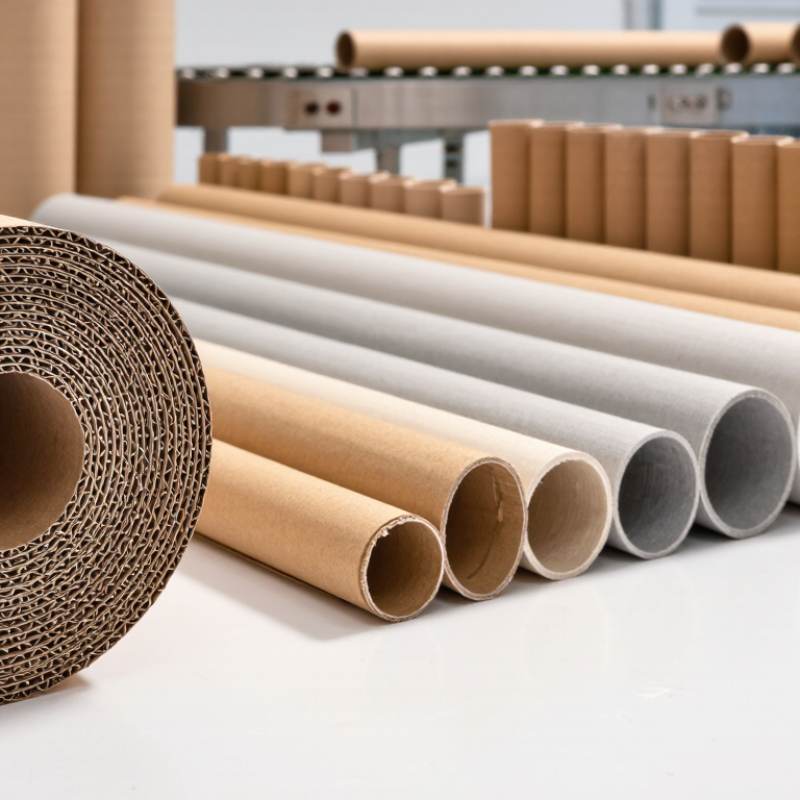
2026 Carton Tube Market: Demand, CAGR, and Regional Buying Signals
In 2026, the carton tube market is gaining attention from global buyers seeking recyclable, lightweight packaging. Demand is rising in food, cosmetics, household goods, and specialty retail. Buyers increasingly prefer fiber-based tubes with reliable barriers, accurate printing, and stable structural strength. Market forecasts suggest steady growth, but reported CAGR figures differ by region and research method. Treat forecasts as signals, not guarantees.
Regional buying behavior is becoming more specific. Europe shows strong interest in recyclable materials, traceable sourcing, and lower-impact production. North American buyers often prioritize fast delivery, premium presentation, and flexible minimum order quantities. Asia-Pacific remains important for scalable production and competitive pricing, although quality consistency must be checked carefully. Middle Eastern and African markets may offer new demand through food, personal care, and industrial applications. Local logistics can still change the real purchase cost.
Tips: Ask manufacturers for recent test reports, sample tubes, moisture-resistance data, and production lead times. Compare delivered cost, not only the factory price. Check whether the supplier can maintain diameter, wall thickness, and print alignment across large batches. Small pilot orders are useful. I have found that attractive samples can hide weak batch control, so inspection planning should begin before contract discussions. Also, regional demand estimates may be imperfect; update them with distributor feedback and actual order activity.
Materials and Production: GSM, Wall Thickness, Cores, and ISO 9001
When comparing carton tube manufacturers in 2026, global buyers should examine materials before reviewing price. GSM means paper weight in grams per square metre. It helps indicate strength, density, and surface consistency. However, higher GSM does not always create a better tube. Adhesive quality and winding pressure matter too.
Wall thickness should match the product’s weight, filling method, and transport conditions. A tube for lightweight goods may use a thinner wall, while heavy contents require stronger layers. Ask for measured thickness, tolerance limits, and compression test results. Small differences can affect filling equipment. They can also cause crooked labels or damaged ends. I have seen samples that looked identical but performed differently during stacking. That comparison is often missed.
Core size deserves equal attention. Check inner diameter, outer diameter, length, and roundness. A small error may stop automated machinery. Request samples from regular production, not only carefully selected samples. ISO 9001 shows that a manufacturer follows a documented quality management system. It does not guarantee every shipment is perfect. Buyers should review inspection records, material traceability, corrective actions, and batch consistency. Ask for evidence. Paper moisture can also change during storage, especially in humid warehouses. Some specifications remain unclear until testing begins. That is an uncomfortable but useful reality. A practical supplier should explain limits honestly and support independent verification before large orders.
2026 Carton Tube Manufacturing Benchmarks: Materials and Production
Typical specification benchmarks for paper carton tubes used in packaging, mailing, labels, and industrial applications. GSM indicates paperboard grammage, wall thickness reflects the finished tube structure, and core diameter is the nominal internal diameter.
Higher GSM and wall thickness generally improve stiffness and crush resistance. Actual specifications vary with winding method, adhesive system, moisture conditions, and required load performance. ISO 9001 is a quality-management-system standard; buyers should verify the certificate scope and production site rather than treating it as a product-grade specification.
Manufacturer Ranking Metrics: Capacity, MOQ, Lead Time, and Defect Rate
Ranking carton tube manufacturers in 2026 requires more than comparing factory size. Capacity should mean verified monthly output, not installed machinery alone. Smithers’ 2024 paper packaging outlook indicates steady global growth of roughly 3% annually through the decade. Buyers should therefore check available capacity during peak seasons. A factory producing 8 million tubes monthly may have only 1 million units available for new orders.
MOQ reveals production flexibility. Large minimum orders can reduce unit costs, but they may create excess inventory. Practical buyers should compare MOQ with forecast demand, storage space, and artwork changes. Lead time should include proofing, material purchasing, production, inspection, and shipping. A quoted 18-day production window can become 35 days after these steps are added. Ask for recent delivery records.
Defect rate requires stronger evidence. ISO 2859-1 supports structured acceptance sampling, while Six Sigma uses 3.4 defects per million opportunities as an ideal benchmark, not a normal carton-tube result. Request inspection data by batch, including crushed edges, loose seams, poor printing, and incorrect dimensions. A useful ranking can weight capacity at 25%, MOQ at 20%, lead time at 25%, and verified defect performance at 30%. That weighting is only a starting point. It may undervalue sustainability or communication quality. Buyers should review at least three production batches before trusting a published rate. Supplier claims are not proof.
Sustainability Check: FSC, Recycled Content, and CEPI’s 82% EU Rate
For global buyers comparing 2026 carton tube manufacturers, sustainability evidence should come before polished product samples. A supplier may describe a tube as “green,” but that phrase proves little. Ask for a valid FSC chain-of-custody certificate, certificate scope, and matching production site. The certificate should cover the actual carton board used, not only the supplier’s office.
Recycled content needs equal attention. Request the percentage, material source, and supporting declarations. Post-consumer fiber usually provides stronger environmental value than factory scrap. Still, recycled fiber can affect stiffness, print quality, and moisture resistance. A technical sample reveals more than a sales sheet. Check the tube after compression, filling, and storage. Small differences matter.
CEPI reports an 82% paper recycling rate in Europe showing a strong regional recovery system. However, this figure does not mean every carton tube contains 82% recycled fiber. Nor does it guarantee collection in the buyer’s market. Confirm local recycling instructions and the tube’s adhesive, coating, and metal components. Some suppliers provide excellent documentation but weak traceability during peak production. That is an uncomfortable gap. A reliable purchasing review should include batch records, third-party audits, and recent test reports. FSC and recycled content are useful signals, not automatic proof of responsible manufacturing.
Global Buyer Shortlist: Certifications, Pricing, Exports, and 2026 Fit
2026 Top Carton Tubes Manufacturers for Global Buyers?
A reliable carton tube manufacturer should offer more than attractive pricing. Global buyers need documented quality systems, material traceability, and consistent production records. Request current certifications, audit reports, and test results before approving samples. Check whether the supplier can meet food-contact, packaging, or regional compliance requirements. Export experience also matters, especially for moisture protection and accurate shipping documents. A beautiful sample proves little.
Pricing should be compared by delivered cost, not unit price alone. Include tooling, printing, minimum order quantities, inspection, freight, and possible customs charges. Ask for pricing at several volumes, such as 10,000, 50,000, and 100,000 pieces. This reveals whether the supplier supports real growth in 2026. My own evaluations often find that the cheapest offer becomes expensive after revisions. No shortlist is perfect.
Tips: Request three production samples. Measure wall thickness, inner diameter, compression strength, and print alignment. Confirm lead times in writing, including peak-season delays. Review export references from markets similar to yours. Keep one approved sample for future comparison. Also ask how rejected products are controlled; answers can expose weak processes. A 2026-ready supplier should communicate clearly, adapt to sustainable material goals, and provide realistic capacity data. Some suppliers promise fast scaling too easily. Treat that as a question, not proof.
| Supplier Profile | Manufacturing Region | Primary Carton Tube Products | Typical Material Specifications | Indicative Export Price* | Typical MOQ | Estimated Lead Time | Export Capability | Certification and Compliance Evidence | Customization Capability | 2026 Buyer Fit |
|---|---|---|---|---|---|---|---|---|---|---|
| Profile A | East Asia |
Spiral-wound mailing tubes Postal tubes Poster and document tubes |
Recycled kraft outer paper 1.5–3.0 mm wall thickness Standard internal diameters: 50–100 mm |
USD 0.28–0.85 per unit Indicative FOB range for standard sizes and volume orders |
5,000–20,000 units | 20–35 days after artwork approval | Regular container exports to North America, Europe, Australia and Southeast Asia | ISO 9001 commonly available FSC-certified paper options RoHS/REACH declarations on request | Custom diameter, length, wall thickness, offset printing, labels and end caps | High for cost-sensitive global programs |
| Profile B | South Asia |
Textile and yarn cores Food-grade paper canisters Industrial winding cores |
Kraft or coated paperboard 2.0–8.0 mm wall thickness High-compression grades available |
USD 0.18–1.20 per unit Highly dependent on diameter, strength and inner lining |
10,000–50,000 units | 25–45 days | Established sea-freight routes to Europe, the Middle East, Africa and North America | ISO 9001 subject to facility verification FSC raw-material option Food-contact documentation for selected grades | Strong compression tubes, moisture-resistant liners, printed wraps and die-cut ends | High for industrial and high-volume applications |
| Profile C | Western Europe |
Premium gift tubes Cosmetic packaging tubes Retail-ready paper canisters |
Virgin or recycled paperboard 1.0–2.5 mm wall thickness Premium textured and coated finishes |
EUR 0.75–2.80 per unit Typical for shorter runs and premium finishing |
1,000–5,000 units | 30–50 days | Efficient road and short-sea distribution across the European Union and the United Kingdom | ISO 9001 frequently available FSC Chain of Custody option EU packaging compliance support | Foil effects, embossing, matte or soft-touch coatings, fitted inserts and premium closures | High for premium retail and short lead-distance supply |
| Profile D | Central and Eastern Europe |
Mailing tubes Engineering drawing tubes Protective paper cores |
Recycled kraft board 1.5–4.0 mm wall thickness Medium-to-high crush resistance |
EUR 0.35–1.10 per unit Indicative ex-works range for standardized formats |
2,000–10,000 units | 15–30 days | Strong regional road freight coverage and regular exports to EU markets | ISO 9001 available from qualified facilities Recycled-content declarations FSC paper option | Standard sizes, custom labels, two-color printing and recycled-content configurations | High for EU replenishment and lower transport emissions |
| Profile E | North America |
Heavy-duty shipping tubes Concrete-form and construction cores Custom industrial cores |
Multi-ply kraft paperboard 3.0–12.0 mm wall thickness High-load and impact-resistant structures |
USD 0.90–4.50 per unit Generally higher for heavy-duty specifications and low volumes |
500–5,000 units | 10–30 business days | Strong domestic distribution with selective exports to Canada, Mexico and the Caribbean | ISO 9001 at selected plants Recycled-content options Product testing available | Rapid prototyping, custom strength testing, oversized dimensions and engineered cores | High for North American speed-to-market requirements |
| Profile F | Southeast Asia |
Printed paper canisters Beverage and snack packaging tubes Promotional gift tubes |
Kraft paperboard with optional barrier lining 1.2–3.0 mm wall thickness Offset or gravure-printed outer wrap |
USD 0.30–1.60 per unit Pricing varies with printing coverage, lining and closure type |
5,000–30,000 units | 25–45 days | Growing exports to East Asia, Australia, Europe and North America | ISO 9001 subject to audit FSC paper option Food-contact tests for selected products | Full-color printing, metalized or barrier liners, pull-tabs, lids and molded-paper inserts | High for branded retail packaging and supply diversification |
| Profile G | Türkiye and Mediterranean Region |
Carpet and textile cores Mailing tubes Retail paper cylinders |
Recycled or virgin kraft board 2.0–6.0 mm wall thickness Medium and heavy-duty grades |
USD 0.25–1.40 per unit Indicative range before freight, tooling and taxes |
3,000–15,000 units | 20–40 days | Convenient road and sea access to Europe, North Africa and the Middle East | ISO 9001 commonly requested FSC sourcing available from selected mills Packaging conformity documents | Large-diameter cores, custom lengths, printed sleeves and compression-grade construction | Medium to high for regional sourcing and diversified logistics |
| Profile H | East Asia Premium Conversion |
Luxury paper tubes Refillable-product packaging High-end presentation canisters |
Recycled or virgin board with paper-based coatings 1.0–2.5 mm wall thickness Precision-fit closures |
USD 1.20–5.00 per unit Applicable to complex finishing and multi-component packaging |
1,000–10,000 units | 35–60 days | Regular air and sea freight options for Europe, North America and Asia-Pacific | ISO 9001 at qualified facilities FSC-certified board option Material declarations available | Embossing, debossing, paper labels, magnetic-free closures, inserts and structural prototypes | High for premium sustainability-led product launches |
Related Posts
-
Overcoming Challenges with Carton Tubes: Solutions for Common Issues
-
The Rise of Eco Friendly Carton Tubes and Their Impact on Sustainable Packaging Trends
-
2026 Best Carton Tubes for Global Sourcing?
-
China Top 10 Shipping Tubes Suppliers for Global Buyers
-

2026 Best Cardboard Tubes for Shipping Buying Guide
-
Top 10 Uses of Carton Tubes You Should Know?