2026 Best UVLED Flatbed Printing Techniques for Quality Results?
The landscape of digital printing is shifting rapidly, with "UVLED Flatbed Printing" emerging prominently. This technology offers notable advantages, such as faster curing times and improved energy efficiency. According to a report by Smithers Pira, the UVLED market is projected to grow by 25% annually until 2026. This trend reflects a demand for high-quality results in diverse applications, including signage, packaging, and decorative printing.
Industry expert Dr. Emily Chang emphasizes the potential of UVLED Flatbed Printing. She states, “The versatility and sustainability of this technology make it a game-changer.” Her insights underline the increasing reliance on UVLED for producing vibrant and durable prints. However, challenges remain. Not all inks are compatible, and the initial investment can be substantial. These factors prompt businesses to rethink their strategies.
Quality outcomes depend on various elements like printer settings and substrate type. The learning curve for operators is significant. As the industry evolves, there is room for improvement and adaptation. The journey toward achieving superior UVLED Flatbed Printing results must include ongoing education and experimentation.
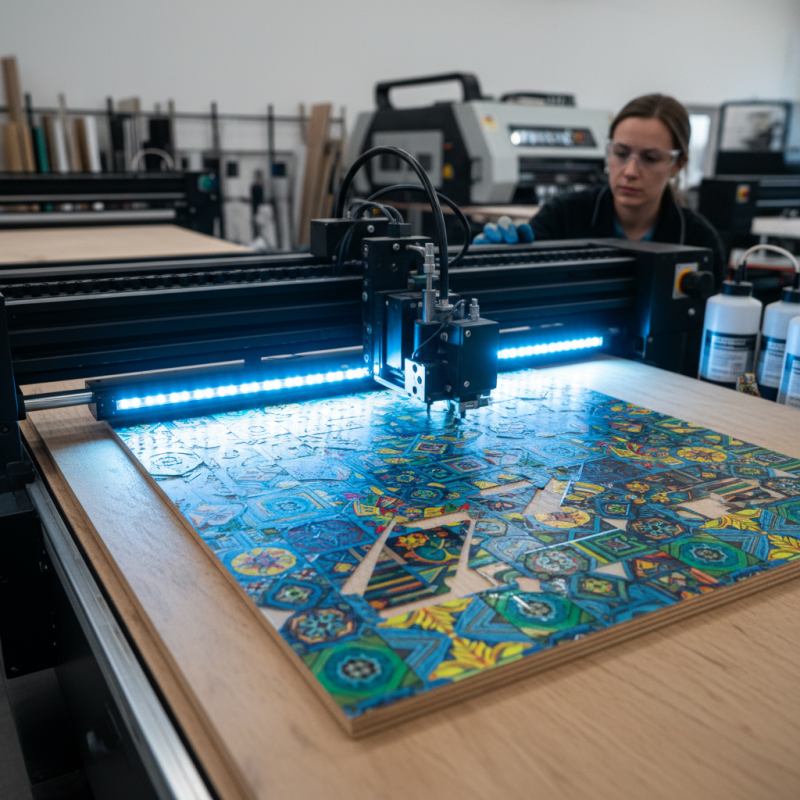
Introduction to UVLED Flatbed Printing Technology
UVLED flatbed printing technology has rapidly gained traction in various industries. This method utilizes ultraviolet light to cure ink as it is printed. According to recent market research, the UV printing market is projected to reach $7.3 billion by 2026, driven largely by technological advancements and increased demand for high-quality prints.
One key advantage of UVLED flatbed printing is its versatility. This technique can print on various substrates, from wood to glass. The inks used are often eco-friendly, reducing VOC emissions significantly. However, achieving consistent print quality can be challenging. Factors like ink viscosity and curing speed can lead to imperfections. An operator must maintain constant oversight to ensure optimal results.
Another aspect to consider is the initial investment costs. UVLED printers can be expensive, which may deter some small businesses. Yet, the long-term savings on materials and sustainability benefits could outweigh these costs. Data indicates that companies adopting UV technology have seen improved production efficiency by as much as 30%. This highlights the need for careful evaluation of both benefits and drawbacks when considering this printing technique.
2026 UVLED Flatbed Printing Techniques Performance Comparison
This bar chart illustrates the performance metrics of various UVLED flatbed printing techniques in 2026, showcasing attributes such as speed, color brightness, durability, and cost efficiency. These metrics provide valuable insights into the effectiveness of UVLED printing for quality results.
Key Features and Advantages of UVLED Flatbed Printers
UVLED flatbed printers are becoming increasingly popular in various industries. They offer distinct advantages that enhance printing quality and efficiency. One key feature is the ability to print on a vast array of substrates. From wood to metal, these printers excel. A study by the Smithers Pira Group noted that the UV printing market is expected to grow by 8% annually, indicating a robust demand for versatile printing solutions.
Another significant advantage is the quick curing time. UVLED technology allows prints to dry instantly. This speeds up production times and reduces waiting periods. Reports show that businesses can increase their output by nearly 30% with this method. However, achieving ideal curing results can be tricky. Improper settings may lead to incomplete curing, affecting print durability.
Energy efficiency is another feature that stands out. UVLED printers consume less energy compared to traditional methods. According to the EPA, energy savings can be as high as 50%. This helps reduce operational costs. Yet, businesses must remain cautious. Some UV inks may produce harmful emissions during printing. Continuous monitoring is crucial to ensure a safe working environment.
Common Applications of UVLED Flatbed Printing in Various Industries
UVLED flatbed printing is revolutionizing various industries. This technology allows printing on diverse materials, enhancing creativity and application. In the signage industry, UVLED printing creates vibrant outdoor banners. These prints are durable and resist fading. However, achieving perfect color consistency can be challenging. Overcoming this requires constant testing and adjustments.
In the packaging sector, UVLED flatbed printing allows unique designs on rigid substrates. Brands can offer custom solutions that stand out. The quick curing process ensures faster production times. Yet, achieving the right surface texture can be tricky. Sometimes, the printed texture may not meet expectations, prompting further refinements.
The interior design industry also benefits from UVLED technology. It enables the printing of intricate wall art and customized furniture pieces. These applications bring personalized touches to spaces. However, some designs may not adhere well to all surfaces. This necessitates thorough surface preparation and testing to ensure quality results.
Innovative Techniques for Enhancing Print Quality and Efficiency
In the realm of UV LED flatbed printing, achieving high-quality results requires innovative techniques. One effective approach is the use of advanced curing systems. These systems harness the power of UV light to cure inks instantly. This immediately locks in colors and details, reducing drying time significantly. However, uniform curing can be a challenge. Uneven surfaces may lead to inconsistent results. Continuous monitoring is essential to mitigate this issue.
Another exciting technique involves optimizing ink formulations. Customizing inks for specific materials can greatly enhance adhesion and vibrancy. For instance, using unique colorants can produce stunning effects on various substrates. Yet, not every formulation works flawlessly. Testing different mixtures may be necessary to find the ideal balance. Continuous experimentation is key to refining these inks.
Additionally, employing precision registration systems can improve print accuracy. These systems help align multiple layers perfectly. Misalignment can cause blurring or double imaging, which detracts from quality. Investing time in calibration can be tedious, but it pays off in the end. By focusing on these innovative techniques, print shops can elevate their productivity and quality.
Future Trends and Developments in UVLED Flatbed Printing Technology
The future of UVLED flatbed printing technology is promising yet challenging. As this technology evolves, advancements in LED light sources drive significant changes. These developments enhance the quality and speed of printing. The introduction of better inks and substrates shows potential to improve color accuracy. Additionally, eco-friendly options are on the rise, appealing to environmentally conscious consumers.
However, challenges remain. Not all surfaces respond well to UVLED printing. Certain materials may not produce consistent results. This inconsistency can frustrate operators seeking flawless output. Research and innovation must focus on overcoming these material limitations. Training for operators is crucial for harnessing the full potential of new technologies. As businesses adopt advancements, they should be prepared to adapt and learn continuously.
Emerging trends indicate a shift towards automation in UVLED printing. Automated systems promise efficiency and reliability. Yet, reliance on technology must be balanced with skilled craftsmanship. Human oversight will still be essential. As we look ahead, the integration of artificial intelligence could revolutionize print quality control. Companies must stay informed on these developments to remain competitive in the marketplace.